
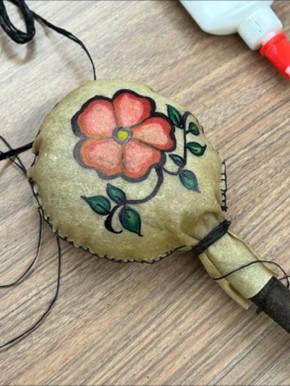
The Faculty of Education invites submissions for the 2026–27 issue of The Knowledge Forum, focused on Indigenous education and reconciliation ten years after the publication of the Truth and Reconciliation Commission’s 94 Calls to Action and Queen’s Truth and the Reconciliation Commission Task Force Final Report, Yakwanastahentéha | Aankenjigemi | Extending the Rafters. Over the past ten years, teachers, students, researchers, community members, and institutions have engaged in diverse and ongoing work that responds to the calls to action, both general and specific.
This work has centered Indigenous knowledges, relationships, land, and educational justice. Much of this work has been, and continues to be, a labour of love. This Knowledge Forum issue seeks to refresh the spirit of the Extending the Rafters Report: to pause and acknowledge what has been accomplished and share ideas for moving forward.
Submission Details
Abstracts for papers, essays, and reflections (up to 150 words) are due June 1, 2026. Decisions will be made in June, and final submissions are due November 30, 2026. As the Knowledge Forum aims to reach a broad audience engaged in education and learning, written submissions should generally not exceed 1,000 words.
Creative submissions (e.g., photography, poetry, short film/video essay, artwork, cultural narrative) should be submitted in full, accompanied by a short description (up to 50 words) explaining how the work relates to the theme. If submitting physical artwork, please include clear photographs of the piece. These are also due June 1, 2026.
We welcome submissions from alumni, graduate students, teachers, school and board leaders,
Indigenous knowledge keepers and educators, researchers, community partners, and policymakers. Anyone with a story, reflection, or research to share is welcome to submit.
Possible topics include, but are by no means limited to:
- Reflections on the Task Force report’s impact on educational policies, programs, and practice
- Indigenous education and reconciliation in pre-service and in-service teacher learning
- Narrative accounts of relationships, community-led efforts, and educational practices
- Land-based learning and relationships with land in classrooms and communities
- Experiences of Indigenous students, educators, and communities in schools and universities
- Teaching histories of colonization, residential schools, and treaty relationships
- Indigenous-led curriculum development and educational initiatives
- Community-engaged and culturally grounded approaches to learning
- Stories of allyship, responsibility, and relationship-building in education
- The role of storytelling, art, and cultural expression in reconciliation and education
- Institutional change and accountability in advancing reconciliation in education
- Visions and Futures for the next decade of Indigenous education and reconciliation
- Global Indigenous and anti-colonial solidarities
How to Submit
Please email your abstract to knowledgeforum@queensu.ca. Include your affiliation (e.g., alumni, student, educator, researcher, community member, etc). You may also contact the committee at this address with any questions about the publication.