
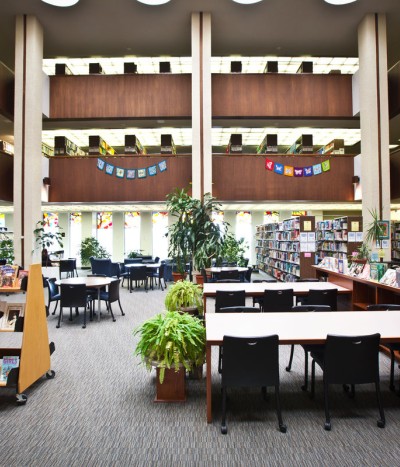
 Libraries have always been the heart of communities. They are safe spaces, resource hubs, and an endless source of knowledge and ideas. At the Queen’s Faculty of Education, the Education Library sits at the centre of daily life. It’s home to teacher candidates deep in coursework, families and local educators seeking learning materials, and students from the nearby Jean Royce Hall Residence who use the space for quiet study. Step inside on any given day and the library hums with activity, collaboration, and community.
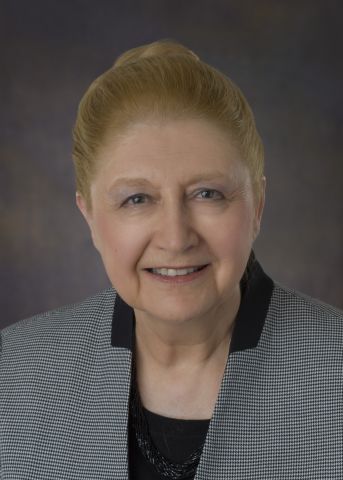
Few people understand the library’s impact more deeply than Dr. Rosa Bruno-Jofré, Professor Emerita of History of Education, former Dean of the Faculty (2000-2010), and Fellow of the Royal Society of Canada. Across her decades of scholarship, teaching, and leadership, the library has been a steadfast partner.
For Rosa, education and libraries are key to human thriving. As she observes, “Our global environment now lacks emphasis on truth, trust, empathy, inclusion, and respect. We are living through a ‘reverse wave’ in democratization, a term coined by Huntington (1991). However, faculties of education and schools and their libraries have a powerful role to play. They bring an ethical dimension and a reaffirmation of human dignity through cultural criticism and an understanding of equity, recognition, inclusivity, as well as respect for neurodiversity and social justice.”
Her view of libraries is expansive: “How could our student teachers be engaged in a deliberative process and collective participation and develop judgement without well-selected bibliographical and teaching materials that would allow them to develop the necessary skills to become educators? Going beyond mere statements, these materials, along with community building and involvement, allow us to understand ourselves better and generate solidarity; they allow us to keep memories and narratives of injustice alive, and they even provide us with the opportunity to develop an alternative understanding of ourselves and of what we mean by community, not to mention what we mean by justice.”
Global Scholarship
The librarians Rosa has worked with over the years have provided immeasurable support for her detail-oriented and internationally-positioned research. The support has been so impactful that Rosa and her co-author, Dr. Jon Igelmo dedicated their book on Ivan Illich, (University of Toronto Press) to Brenda Reed, former head librarian.
This tradition of support continues today. Nathalie Soini, Education Librarian, provides exceptional support, including liaising with archives in New York to secure rare materials for SSHRC-supported historical research of Father Ford, a Catholic educator known for his involvement in civil rights and anti-racist initiatives. Nathalie and Rosa are both multi-lingual and share a weekly language exchange, which sharpens their French and Spanish fluency. This global, multilingual lens ensures that the scholarship and resources at the Education Library, and our Faculty more broadly, serve our Francophone community. For example, the Education Library is also home to a Francophone Indigenous collection, developed in collaboration with former Elder-in-Residence Mireille La-Pointe.
Open Knowledge
 Rosa’s relationship with the Queen’s Library system extends beyond research support. Since 2000, she has co-edited Encounters on Theory and History of Education, an international open-access journal she co-founded with Dr. Gonzalo Jover of the Universidad Complutense de Madrid. This was the first Queen’s journal hosted on open journal systems (OJS), and it remains housed in the Queen’s Library. Encounters has benefited from the expertise of Queen’s scholarly publishing librarian Mark Swartz and continues to highlight global scholarship from distinguished senior scholars from around the world, as well as from junior scholars and graduate students.
The Queen’s Library system, including the Education Library, has been instrumental in the approval of Rosa’s proposal for an Open Monograph Series on Theory and History of Education, which has now published six volumes, all without a budget. It has involved a tremendous group effort and a large committee to bring this series to fruition. The Queen’s librarian, Rosarie Coughlan, has also helped us immensely. The series has also now become an open door for other series.
Rosa is proud of how the Faculty of Education has evolved since its establishment in 1968: “One of its greatest achievements has resided in the way the program moved to an inquiry-based curriculum that has allowed our students to learn more about silenced voices, while perpetually gaining a renewed vision of education’s possibilities through new ways of teaching and viewing the world through a more critical lens.”
The RBJSE
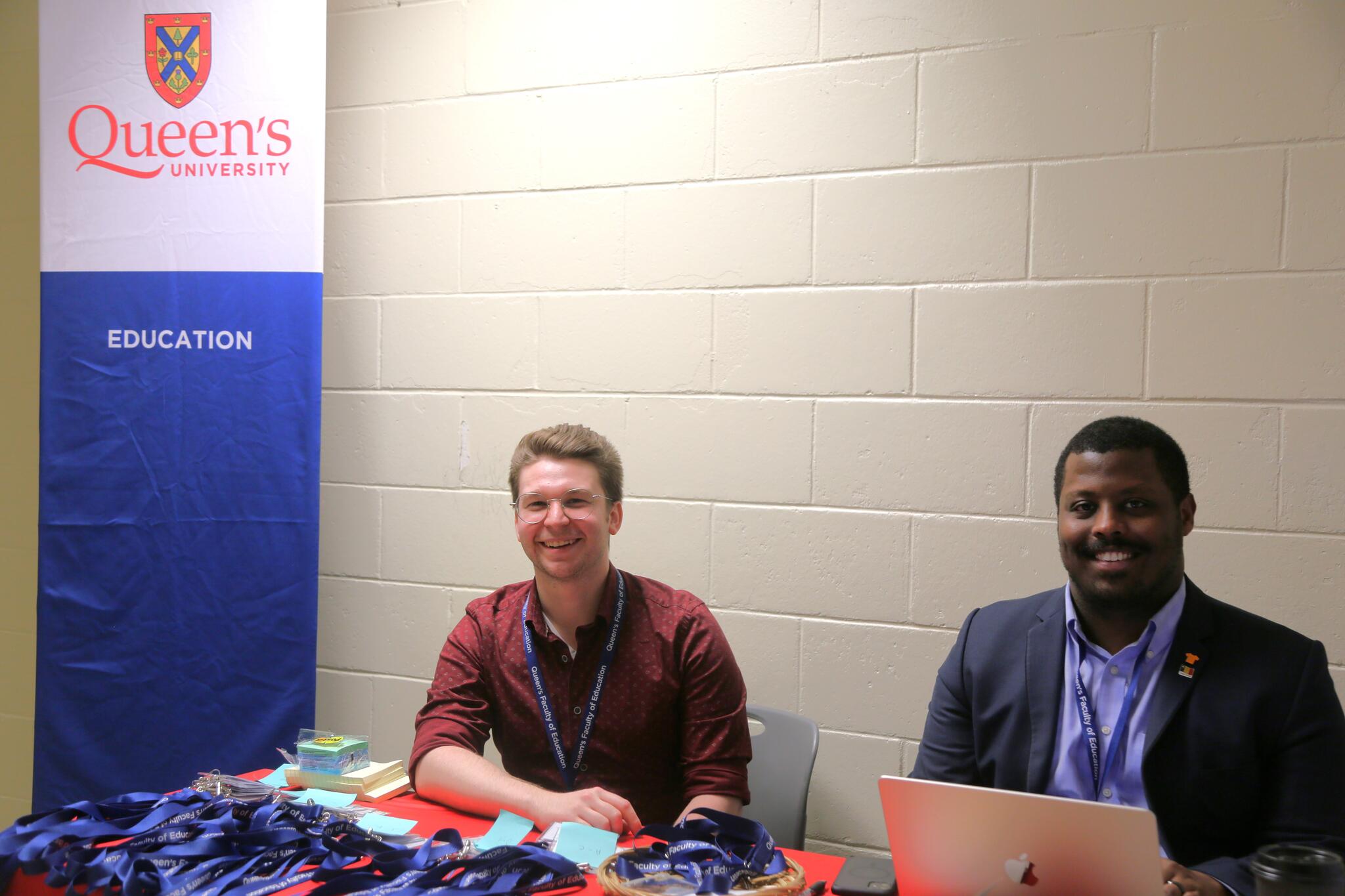 Rosa’s partnership with the library can be traced back to the early days of her deanship. One of her first acts as dean was to establish a graduate student symposium (which was named in her honour after her deanship). The Rosa Bruno Jofré Symposium in Education (RBJSE) was established in 2001. The Education Library, including now-retired librarian, Brenda Reed and members of the Faculty worked closely with Rosa to bring the RBJSE to life. Rosa reflects on this: “At the outset of the symposium, I remember well how Brenda Reed helped me to set tables at the Donald Gordon Centre for an exhibition of our Faculty scholarly production. Covered in dust, I invited Brenda to have lunch with me. Initially, only two graduate students presented their work, and there was a presentation by a speaker from Cultural Studies who came from York University. Little by little, however, (and with the invaluable help of the late Nancy Hutchinson), the symposium became an integral part of the graduate students’ experience. Now our graduate students run the symposium .” My goal was to create a community of inquirers, a deliberative community. It took better shape when we were able to develop the Faculty of Education basement (a veritable dungeon) and build a graduate students' facility.
Today, the RBJSE is fully student-led and a highlight of the academic year, an example of how Rosa and the Education Library’s spirit of collaboration continues to ripple out in our community. The RBJSE 2025 student coordinators Holly Crump and Cheryl Lee-Yow shared that, “Rosa’s dedication to supporting graduate students is invaluable. Each year, we hold the Rosa Bruno Jofré Symposium in Education at the faculty so that graduate students can share their works in progress and completed research, gain insights from speakers with various expertise, and build connections with each other. Her support has allowed us to continue providing the conference accessibly to students from across the country!”
Together, the ongoing partnership between Rosa, Education Library, and RBJSE reminds us that libraries and our communities shape not only how we learn, but how we imagine and build more just societies and educational institutions.
The Faculty is honoured that Rosa gives annually to the RBJSE and the Education Library. These are vibrant institutions and the heart of our community. If you are interested in supporting these initiatives, please consider giving to the Education Faculty Fund and the Education Library.
References
Huntington, S. P. (1991). The third wave: Democratization in the late twentieth century. University of Oklahoma Press.