
 In this episode of Popular Podagogy, host Chris Carlton chats with Dr. Sandy Youmans about why early math really matters—and how we can help kids stop “hating math” and start feeling confident with numbers. From foundational numeracy skills to mixing direct instruction with playful, real-world learning, Sandy breaks down what strong early math teaching actually looks like in Canadian classrooms. With a parent perspective (and some great at-home math ideas) thrown into the mix, this conversation makes a compelling case for building math confidence early—because it turns out kids don’t hate math, they hate feeling bad at it.
Resources
- AIM Collective (Assessment and Instruction for Mathematics) – A Canada-wide network of researchers and educators focused on strengthening elementary math education
- Math Cognition Lab (Carleton University) – Research lab hosting the AIM Collective and leading work on early numeracy and number development
- Beyond 1-2-3: Early Mathematics Education in Canada – Book co-edited by Dr. Sandy Youmans
- earlymath.ca – Website hosted by Dr. Youmans with resources related to early mathematics education
- TIMSS (Trends in International Mathematics and Science Study) – International assessment of math and science achievement (Grades 4 and 8)
- Young Mathematicians – Online math resources for educators and families
- Erikson Early Math Collaborative – Organization supporting early math learning and instruction
- DREME Network (Stanford University) – Research network focused on early math development
- Measuring Penny by Loreen Leedy – Children’s book highlighting measurement concepts through everyday experiences
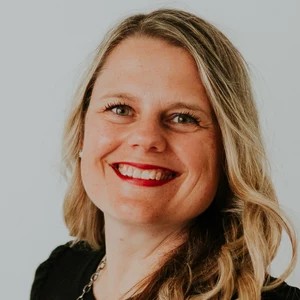
About Sandy Youmans
Dr. Alexandra (Sandy) Youmans is an adjunct assistant professor at the Faculty of Education, Queen’s University. She is a former elementary teacher, who is passionate about equipping educational professionals with the skills, knowledge, attitudes, and resources needed to support learner success. Dr. Youmans is a co-investigator of the Assessment and Instruction for Mathematics (AIM) Collective. She was the co-lead of the Critical Transitions in Early Math Community of Practice through the Math Knowledge Network. Dr. Youmans has taught elementary curriculum courses (i.e., Mathematics, Science, Literacy) in the Bachelor of Education program and Professional Master of Education courses on innovative curriculum planning, program evaluation, and collaborative inquiry. She is co-editor of the book, Beyond 1, 2, 3: Early Mathematics Education in Canada (in press with Canadian Scholars). Dr. Youmans co-created the Coalition Model for Professional Development, which was published in the international journal of Teachers and Teaching. Her areas of research interest include elementary mathematics education, collaborative inquiry, adult education, and program evaluation.
Transcript
Theme Song
Talking about innovation in teaching and education. Popular podagogy. Discussions that are topical and sometimes philosophical. Popular podagogy. Popular podagogy.
Chris Carlton
Hi there. Thanks for joining us and welcome to another episode of Popular Podagogy, where we try to bring big ideas in teaching and education to life. I'm your host, Chris Carlton, and this podcast is being brought to you by the Faculty of Education at Queen's University. Welcome to our podcast. In this episode, I am excited to be speaking with Dr. Sandy Youmans, who is an adjunct assistant professor here at the Faculty of Education and who is a former elementary teacher. Today we will be talking about the current landscape for elementary education in Canada, and specifically, early elementary mathematics education. As A co-editor of the book Beyond 1-2-3, Early Mathematics Education in Canada, Sandy will be able to speak from a wealth of knowledge on this topic. I have had the privilege of working with Sandy here at the Faculty of Education over the past five years, and I have witnessed firsthand her passion for equipping our teacher candidates and educational professionals with the skills, knowledge, attitudes, and resources needed to support learner success. Sandy has taught elementary curriculum courses in mathematics, science, and literacy in the Bachelor of Education program and professional Masters of Education courses on innovative curriculum planning, program evaluation, and collaborative inquiry. Sandy, welcome to our podcast.
Sandy Youmans
Thank you, Chris. It's great to be here.
Chris Carlton
Sandy, on top of everything that you teach, research, and write, you are also one of the founding members of the AIM Collective, which stands for Assessment and Instruction for Mathematics. Can you tell us a little bit about this community and its importance?
Sandy Youmans
Yes, I'd be happy to. So the AIM Collective is a network of researchers and educators from across Canada who are trying to strengthen the way that elementary mathematics education is being taught in schools. And it's really important that we have researchers and educators working together because there's so much that we can learn from each other. I've learned so much from my colleagues at the Math Cognition Lab at Carleton University, which is the organization that hosts the AIM Collective. And also I've learned from colleagues part of the AIN Collective who are educators and who share their classroom practices and experiences. And so again, it really is about learning from one another and trying to strengthen the field of mathematics education.
Chris Carlton
And the field of professional teachers, I would assume as well. I just love when we have the opportunity to all join together to tackle some of the big issues, which is wonderful. Sandy, the provincial government has tried for years to tackle the low math scores on the standardized tests, though the results released last year showed low but steady or improving math scores, while grade 3 and 6 reading and writing results were lower. And there are also international programs such as TIMS, which stands for Trends in International Mathematics and Science Studies, or the grade 4 and 8, that also bring light to our current math and science education position. From your experience and research, could you please talk about the current landscape for elementary education in Canada?
Sandy Youmans
Yes, I'd be happy to. So I think one of the things that we really need to focus on are foundational skills. And literacy research has been decades ahead of mathematics education research. And so with math education, we're starting to catch up. We're getting there. And so we do have this idea of this new integrative model of number development that really lays out what are the foundational skills that are needed for students to become good at math. And so the way that the integrative model of number development that was created by the Math Cognition Lab by Carleton University says is that we need to start with number knowledge. So that's kind of the foundation. And then building on that, we need to strengthen number relations, so how numbers are related to each other. and then work on number operations. And of course, these are distinct categories, but they're also integrated and interrelated, and they are connected. So when we focus on the operations, we're also strengthening our understanding of number relations and number knowledge. But there's research that shows what the sub-skills are for each of those areas and how they're predicting future math success. So similar to what happened with literacy research, knowing that things like phonological awareness and phonics and morphology are predicting what it means to be a successful reader, we now have information from the research about what it means to be successful at math. And so those foundational skills are being publicized and we're trying to share the information so that we can focus on those skills and really help students. become better at math. I mean, underlying all math is numeracy. And so building that really strong foundation is what's going to be helpful. And I know there's trends in math education, and sometimes those trends are positive, and sometimes they're less positive. And in education, as Chris, we swing back and forth with this pendulum. And instead of swinging back and forth, I think it's really going to be requiring using all approaches that are effective. So direct instruction combined with inquiry, I think will be optimal with improving math education across Canada. And I know I've been part of professional development where we present things like fluency and how it's really important that we work on fluency and we're building, we're using some direct instruction around strategies and how to build fluency. And then teachers will say, well, I didn't know I was allowed to use direct instruction anymore. And of course you're allowed to use direct instruction. It's a really important instructional strategy, and combined with opportunities for hands-on learning and inquiry, it's even more powerful. So I think that's kind of the state where we really need to focus on what are the foundational skills and how can we teach them effectively.
Chris Carlton
And I will relate to the teacher you're referring to saying, well, I thought we weren't supposed to do this anymore because it does change dramatically and sort of over the board. So direct instruction and inquiry is awesome. I do have a quick side question. You said that literacy research was far ahead of math research. Is there a reason for that or why is that?
Sandy Youmans
That's a really good question. I don't know. Maybe there was just... more focus on literacy because, I mean, it's obviously a foundational skill, but it's surprising to know that early numeracy is actually a stronger predictor of future math, school, and life success than literacy. So perhaps as people started to understand just how important numeracy was, that more people started investigating and researching it. I think the benefit of having all the literacy research is that in a lot of ways, there's parallels between the two. And so because we know so much about literacy, we could say, I mean, it can't be that much different than numeracy. I mean, obviously there's things that are different, but in terms of, literacy being about, learning language and the alphabet and being able to decode words. Well, in some ways, it's very similar to numeracy because we have to learn the number system and be able to understand what the numbers are. And as adults, we sort of take that for granted thinking, of course, people know what numbers are. Of course, people know what 37 is. But to a young child, that number 37 is not obvious, right? It's A numeral, a three and a seven, so 3 10s and seven ones, but it has a meaning associated with a quantity. It has a magnitude. So if we're thinking about, 1 to 100, where would 37 lie? And so we take for granted that children just know these things and they don't. We actually have to teach it to them and we have to give them lots of experiences with counting, with numbers, with manipulatives so that they actually know the number system and how it operates. And I think that is foundational knowledge that, again, sometimes as adults we take for granted. But when you work with children and you realize that they struggle with especially things like place value, understanding how big a number is, these are things that we need to work on with them.
Chris Carlton
In science, we always talk about real life connections and experiences. And I think that's very similar for math as well, showing them the real life application of what we're actually instructing. which is exciting. We've sort of talked about this, but we talk about low literacy rates in Canada have prompted reading curriculum changes, which we've all seen. Across Canada, schools are changing the way they're teaching their children how to read with their nude focus on phonics and aligning with the science of reading. So do you feel that we need to do the same approach with numeracy?
Sandy Youmans
Absolutely. I think we definitely need that change. And I think it's going to make all the difference because we have an elementary mathematics achievement gap in place already by grade 4. So in grade 4, based on the TIMS from 2019, so the Trends in International Math and Science Study, we have 1/3 of Canadian students who are already at a low or below benchmark in math. And so the thing about achievement gaps is that over time, they get wider without any intervention. So I mean, in terms of focusing on, grade 3 math scores, grade 4 math scores, the time to focus on those scores is not in grade three and four, right? It's in kindergarten, it's in grade one, it's laying that really solid foundation so that students can be successful. And they do understand the number system and how to operate with numbers and how to compare numbers. So I think underlying everything is those numeracy skills and starting young and helping students build confidence and competence with the number system. And I think the other thing to remember is sometimes in education, we get the course, sorry, the horse and the cart backwards, where we think that if we teach students to love math, they're going to be able to do the math. And I think that research actually suggests the opposite. If we teach children to be good at math, then they're going to have that sense of mastery. And that's very motivating. When you're able to do a skill, it's very motivating. So if we teach... children to be good at math, then they're actually going to enjoy doing math. And so I think that's an important thing to remember too. I think with literacy, we sort of got it a little bit backwards for a while where we thought if we just teach them to learn to love reading, they're going to, you know, they're going to become readers where researchers suggest the opposite. If we teach them how to read, then they're going to be able to read and they can, you know, learn to love reading.
Chris Carlton
And those two words, you said confidence and competency or a sense of mastery. I think that is all part. And as soon as we boost the confidence of the student, the performance often just follows along and they're excited about it.
Sandy Youmans
Exactly. And I mean, I have a personal story to share about one of my children who struggled with math and just very, very self-aware child. And so recently, there's been more structure put in place around math learning and there's been, growing confidence and competence. And the comment that was made was that they realized that they didn't actually hate math. They hated being bad at math. And so now that the skills are developed, they actually enjoy doing math, right? So that's also a really important thing to keep in mind.
Chris Carlton
I love that. Sandy, you're a part of the AIM Collective. You host an earlymath.ca website, which we'll have on our site as well. And you have authored books and many articles about early mathematical education. Could you please talk to us about the practical ways our listeners can bring math into the primary classrooms?
Sandy Youmans
I think you have to bring in the everyday experiences with numbers, so things like calendar, things like time, talking about... how numbers are related to our everyday lives. So whether that's, the number of people in your family, what your street address is, like making it very concrete that we do use numbers in our everyday lives. If you, even when you think about navigating places, you know, that's a form of spatial sense. So being able to find a location or being able to find where, you know, the, the car that you parked was, or the bus route that you're going on is, there's lots of math in everyday life, I think making sure that students see those connections. And then involving math in playful ways, right? Or practical ways, like setting the dinner table and how many people are there in our family and how many plates are we going to need. So being actively involved in those sorts of activities. And yeah, as I mentioned, like just making it fun. So for example, if you write out the numbers 1 to 10 and hide them around the house and then have students go collect them, put them in order, talk about what the numbers are, count up those numbers. Like there's a lot of math skills involved in that. And that's just really fun, simple ways to involve math in your life.
Chris Carlton
Math in everyday life and now in those real life connections and home connections as well. So one of my favorite field trips or my class has always been going to a grocery store. And the amount of language, science, math, art, everything is involved in there. And it's the real life application of all the different topics that we're teaching, which is a lot of fun. And they see it on an everyday basis.
Sandy Youmans
Exactly. You think about money, financial literacy, budgeting, right? Yeah. Adding up the costs of different items. Yeah. So much math happening in our everyday life.
Chris Carlton
And even at an early age, being able to bring that to their attention is so important. From my teaching experience, I constantly witness the power and importance of home connections, which you just mentioned in terms of hiding the numbers around the different rooms, to the students' overall success. Our podcast producer, Erin York, is also a strong supporter of this, and I would like to invite her now in to join the conversation and bring in a parent perspective. of this topic. Welcome, Aaron.
Erin York
Thank you for having me on here, Chris. It's fun to be on the mic instead of just behind it.
Chris Carlton
Aaron, how has your experience been with regards to your child's education and specifically their math learning?
Erin York
Yeah, so I have a 5 and a 7-year-old, and both of them are very interested in math. I too was very interested in math when I was young, and then as I got older and it got more abstract from everyday life, I became not interested in it. And I think that was just not having enough concrete reasons of why it applied to my life and things just being more and more worksheets and less and less. interesting pieces to it. Anyway, so this is one of my big focuses as a parent is thinking about ways to show the fun pieces of math and to apply math to what we do. So for example, a couple weeks ago, I make advent calendars for a bunch of our friends. So instead of me doing it and it taking 10 minutes to write out about all of the numbers and everything, my kids get involved. Does it take a lot longer? It sure does. But I say, okay, we have to make six different advent calendars and we have to write the numbers 1 through 24 on each of these bags. What is the best way to do that? How can you two work together collaboratively to do this, which is also an adventure, but thinking through any of the things I have to do. So another great one that I've been doing is getting my son to come and help me, he's seven years old, in the kitchen okay, so I have this recipe, I need to double it. How do we do that? And getting him to think through. Now, again, this is something that requires a lot more time than if I just press the two times on the recipe that I'm using, but it's a really good way for him to think through that. The other piece, I had the pleasure of going to Sandy's conference, the ECE conference this summer, and I got a great book called Measuring Penny. It's by Laureen Leedy at that conference. And it just goes through all of these different ways you can measure things around having a dog. And it has been, it was so exciting for my kids. We went out and got, we went to walk down to the dollar store and got little measuring tapes that are flexible ones for them to go and measure everything. And I would say that those are one of the toys that gets used the most, toys in air quotes, the toys that gets used the most in my house because they are loving being able to measure things and then thinking about, okay, well, this Barbie is 8 inches tall. And how, if I have 3 Barbies, oh, they are, I can't even do the math of that one. This is, I ever need to, I wish I would have been more engaged in math for longer. This is how many inches that is. I think it's been really fun to think about ways that I get to show them the fun pieces of math. Another one that I've been trying to think about a lot is using cash instead of using cards. I think that was one of the big reasons that I, connected with math. Okay, everything has a value. Here's the money. Here's the thing. And so I'm trying to shift to using a lot more cash around my kids so that they're seeing cash. They understand it a little bit better because I think it's so much harder when you're just tapping something to understand the money and the math pieces that are involved in it.
Chris Carlton
Sandy, how important is that home connection to to building the confidence and competency of our students, our younger students.
Sandy Youmans
I think it's very important. Parents are such powerful partners and they can make such a huge difference in their math skills of their children before they even come to school and during the school years as well. And I really like how Erin talked about, you know, those children's books for math. Those are such powerful tools because if you think about the children's authors and illustrators, they've spent a lot of time around the math in those books and making the concepts really transparent, really visual. And that's another important thing with math is really making that connection between the visual understanding and the conceptual understanding so that children don't just memorize the math, they actually understand the math. And so that deeper understanding of math is also something that we're trying to focus on more these days.
Chris Carlton
Now, I know, Aaron, as my podcast producer, is incredibly resourceful and incredibly engaged in everything she does. Are there sources that parents, if they want to get more involved, are there sources out there, resources out there for parents to be able to do the type of thing that Aaron's talking about? I know you mentioned the books, but websites, anything like that?
Sandy Youmans
Yeah, there's a few really good websites. So like Young Mathematicians is a really good one. There's the Erickson Early Math Collaborative. There's the Dream Network, which is out of Stanford University. So yeah, we can link to a couple of resources for parents for sure.
Chris Carlton
That is amazing. Sandy and Aaron, thank you so much for taking the time to be on here. So informative. I'm always so excited when I hear all of these new ideas and some old ideas that are coming back as new ideas. Sandy, thank you so much f