
This is part of our series on GenAI in the Classroom. We would love to hear from you. How are you navigating GenAI in your classroom? Are you questioning or resisting its use? Actively integrating AI-assisted learning? Encouraging students to reflect critically on AI outputs? Using GenAI to support assessment design or feedback? Submit your GenAI thoughts.
Our teaching contexts couldn't look more different on paper — between Jason and I, we've taught K–12 students in Canada and internationally, graduate students in Faculties of Education, and teachers navigating the messy, hopeful work of becoming educators. But when Generative AI arrived in classrooms, we were watching the same thing unfold from every angle.
And it sparked something in us.
Not because AI doesn't belong in education. But because of the gap we kept seeing between what AI could do for teachers and how it was actually landing. Teachers exhausted and under-resourced were turning to ChatGPT for lesson plans that knew nothing about their students, their philosophy, or the specific constraints of their classroom. We'd spent years supporting new teachers in developing their pedagogical reasoning, and here was a moment to continue that work in a new way and to ask: what should AI do here, and what should it never replace?
As researchers with PhDs in Education from Queen's Faculty of Education, we kept coming back to the same conviction that the lesson plan is not the point. The thinking behind the lesson plan is. When a teacher considers their students' prior knowledge, makes deliberate choices about assessment before instruction, and asks themselves why this, for these learners, now that's not paperwork. That's the professional expertise. That's what shapes learning outcomes.
So we stopped waiting for existing tools to get it right. We brought in a third collaborator — a software developer with deep expertise in AI — and together we built MyLessonStudio. Not as technologists who discovered education, but as educators who went looking for the right technology partner to build what we knew was missing.
We designed it around a simple principle: AI should hold the scaffolding, and the teacher should hold the meaning-making. The platform asks teachers to articulate their philosophy before generating anything. It grounds every unit in backward design and UDL. It produces drafts that expect feedback or revision because revision is where judgment lives.
The biggest challenge we face, and that we hear from teachers constantly, is the pressure to just use it without the space to think critically about what's being lost. There's also a growing gap between how AI is discussed in educational policy and how it actually shows up in a classroom at 7pm when a teacher is building tomorrow's lesson from scratch.
For educators navigating this terrain — especially those new to teaching — our advice is grounded in what we've learned alongside teachers: start small. Use AI for one specific planning pain point and build from there. Remember that teaching is fundamentally about relationships, not technology, and that not every lesson needs AI enhancement. Most importantly, protect your energy. Your mental health matters as much as your lesson plans, and the pressure to become an AI expert overnight is real but not reasonable. You don't need to be an AI expert on day one. You need to be a human who cares about kids.
The deeper issue, though, is that teachers shouldn't have to figure this out alone and on the fly. AI isn't just a new tool to add to a teacher prep checklist — it's a curriculum question. It's reshaping what lesson planning demands, what differentiation looks like, and what professional judgment requires. That means Faculties of Education, K–12 practitioners, researchers, and the teachers already living this reality all need to be at the same planning table.
Our view isn't resistance to AI, and it isn't uncritical adoption. It's intentional design in the classroom, and in the tools we build for it.
About the Author
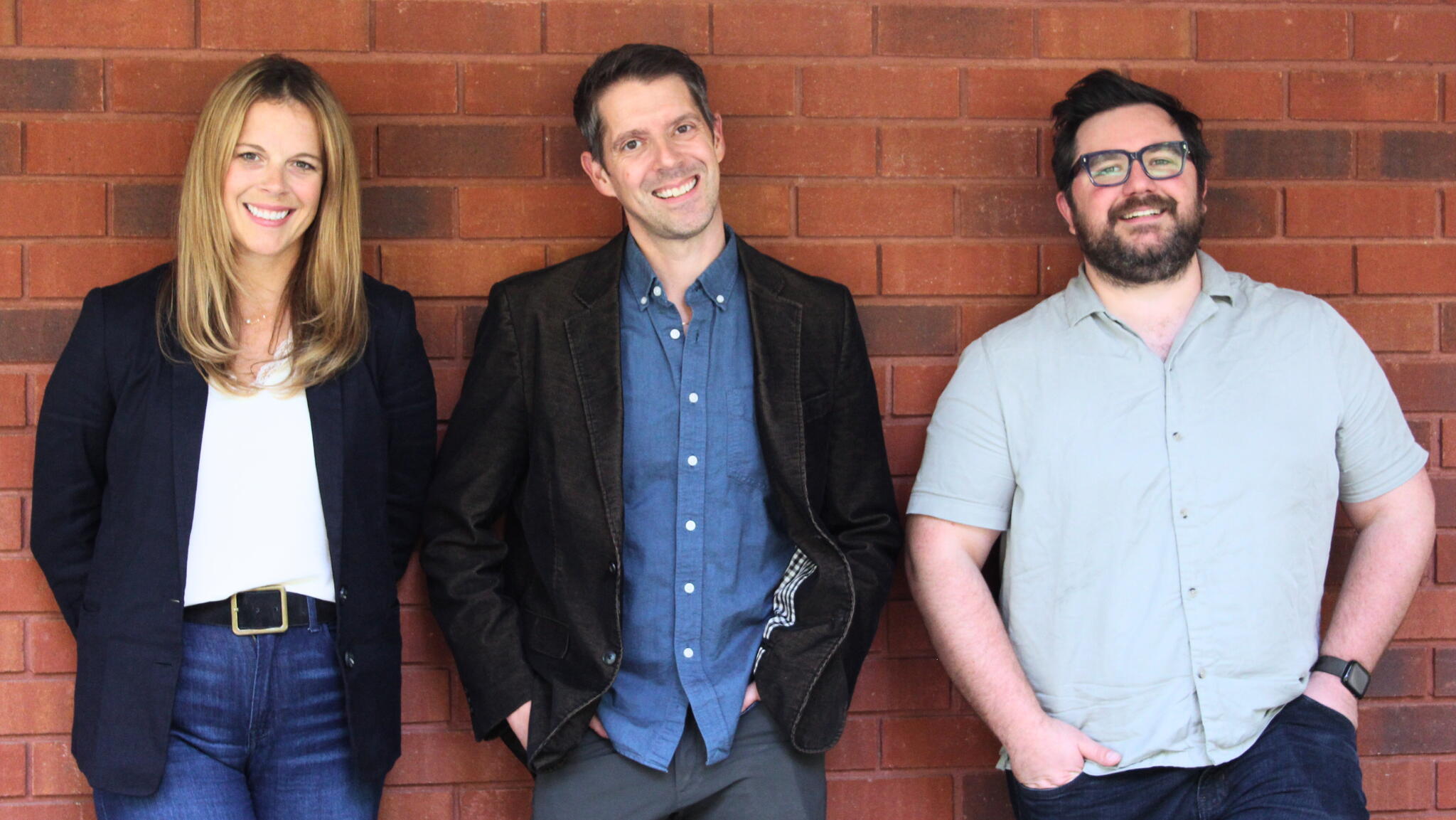
Dr. Launa Gauthier is a certified K–12 teacher and Chief Alignment and Strategy Officer of MyLessonStudio, holding a PhD in Education from Queen's University. She brings 8 years of K–12 classroom experience and over 15 years in higher education teaching, administration, and teacher development, including supervising BEd students as a Faculty Liaison at Queen's.
Dr. Jason Shulha is a certified K–12 teacher and Chief Content Officer of MyLessonStudio, holding a PhD in Education from Queen's University. He brings 15 years of K–12 teaching experience in Canada and internationally, and currently serves as the Assessment and Curriculum Coordinator for online graduate programs at Queen's Faculty of Education.
Nate Axcell is the Chief Technology Officer of MyLessonStudio, holding a BSc in Computer Science and Business Administration. An expert in AI and educational software development, he leads product development and technology strategy at MyLessonStudio.