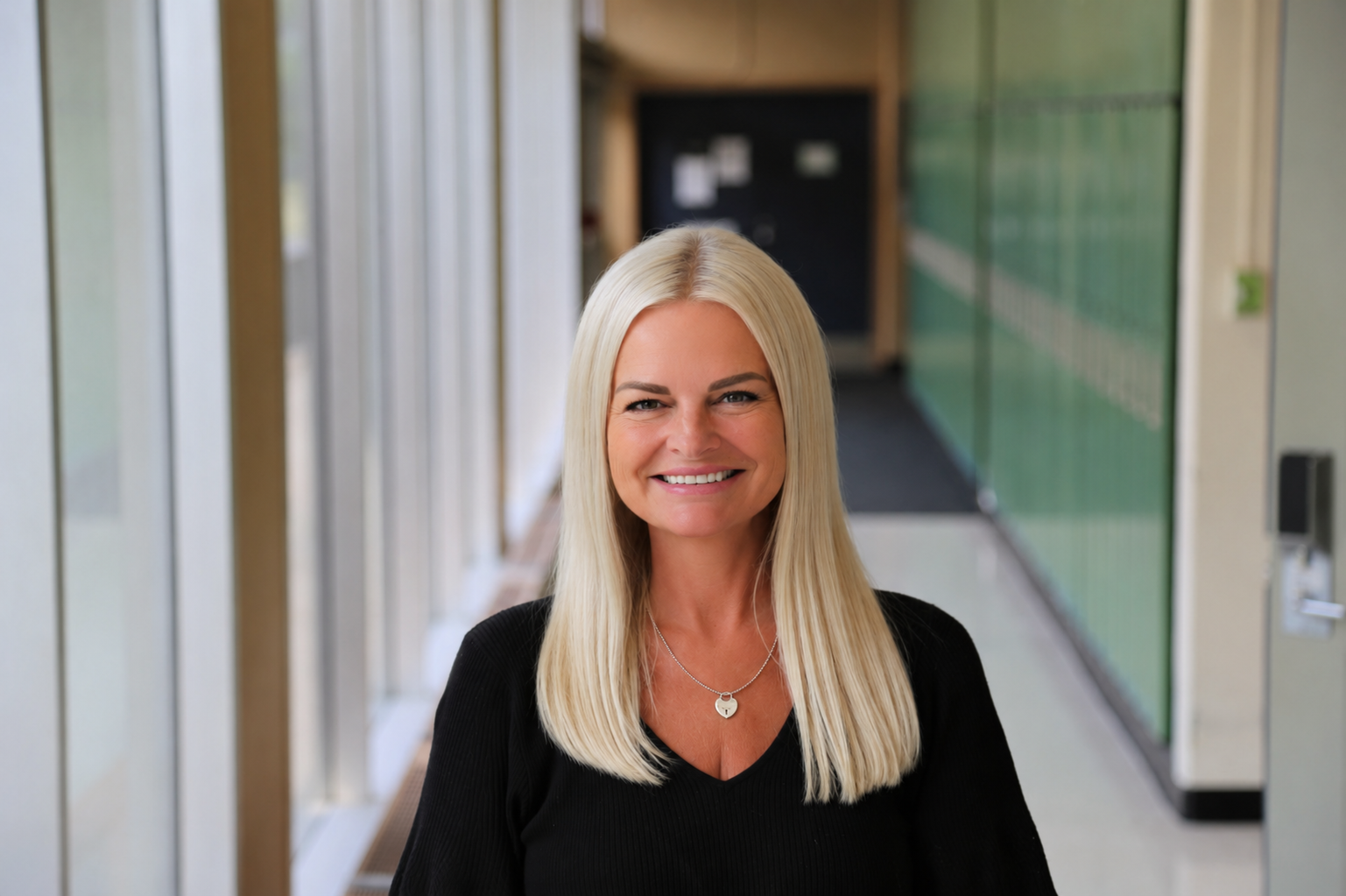
 Queen’s University’s Faculty of Education is excited to announce that Ena Holtermann will begin the role of Executive Director, Multi-Session Programs starting July 1, 2026. With her unique life story, commitment to inclusive education, and passion for community-driven learning, Ena is perfectly poised to lead these innovative programs as they continue to grow.
From Hairdresser to University Leader
As a secondary school student, Ena struggled to feel like she belonged. She was navigating a learning disability while growing up in a newcomer family, and school often felt isolating. Her parents, who had come to Canada from Denmark, were deeply committed to her success, but language barriers made it difficult for them to help her navigate the unfamiliar system. Without that support, and without the right structures in place at school, Ena found herself increasingly disconnected from her learning environment.
Partway through Grade 9, she was encouraged to leave school. A principal suggested she consider a career in the skilled trades or service industry. At the time, it was presented as a practical solution. Ena took that advice home, where her family saw it as an opportunity. In Denmark, students often choose between academic and trade pathways at a similar stage. The idea of moving toward a hands-on profession felt not like a setback, but a step forward.
Unfortunately, Ena did not yet have the high school credits she needed to enroll in a college program in her trade of choice: Hairstyling. Determined to move ahead, she enrolled in night school at St. Lawrence College and completed her high school diploma in seven months. It was an intense period of focus and effort, and one that quietly reshaped how she saw herself as a learner. From there, she entered hairdressing school and began building what would become a 20-year career in the industry.
As a hairstylist, Ena quickly found her footing. She moved into education roles with major companies, where she trained other stylists, led workshops, and toured as part of professional education teams. She developed a reputation for thinking differently and for explaining complex techniques in ways that made sense to a wide range of learners.
It was in those spaces, supporting others and watching their confidence grow, that she discovered a love for teaching.
A chance conversation with a retiring teacher in Kingston opened a new possibility. Encouraged to apply to Queen’s Technological Education program, Ena stepped into postsecondary education for the first time. While completing the program, Ann Marie Hill, professor of Technological Education, encouraged Ena to pursue a Master of Education because she thought Ena might be a good instructor. At the time, there wasn’t a pathway for someone with a diploma in education to gain entry to a master’s program, so Ena mapped out an academic plan to complete an undergraduate degree in a year and a half while continuing to work as a teacher, teaching a hairstyling and aesthetics program in a local high school. She capitalized on night classes and summer term classes to finish her degree while continuing to teach.
Once she finished her degree, Ena applied for the master’s program with supervisor Dr. John Freeman looking at the psychosocial underpinnings of learning, the learner experience, and the student experience. Once she finished her MEd, she continued to teach high school courses but also began teaching night classes in the Technological Education program at Queen’s, eventually becoming the Program Coordinator for the Technological Education Multi-Session Program when it began in 2020.
What Exactly Are Multi-Session Programs?
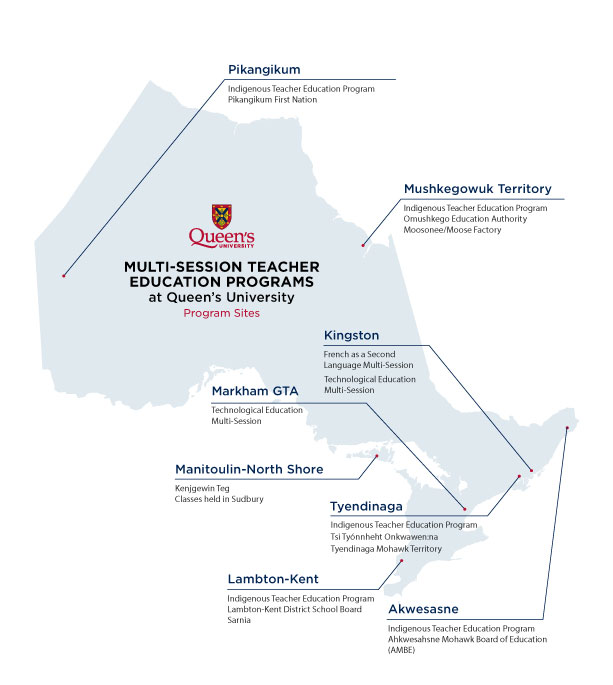 Multi-Session programs at the Queen’s Faculty of Education are reshaping how teachers are trained in Ontario. These programs are designed to accommodate learners who may be balancing careers, family life, or community commitments. Instead of requiring full-time, on-campus attendance, multi-session programs blend short, intensive learning weekends and summer sessions held in communities across Ontario—including Indigenous and French-language sites. This means teacher candidates can study near their homes and communities while fulfilling personal and professional responsibilities.
One of the standout features is the program’s structure. Spanning two years, students engage in six academic sessions including two summers of study. After just one summer term, candidates become eligible for the Multi-Session Transitional Certificate of Qualification and Registration (MTCQR). This allows them to start teaching in Ontario classrooms while still completing their certification. For second-career teachers and educators already working with Letters of Permission, this model provides a practical and accelerated path to becoming fully qualified.
Leading With Passion
As the incoming Executive Director, Multi-Session , Ena is driven by a clear and heartfelt vision. She wants to build on the strong foundation laid by her predecessor, Dr. Peter Chin, and expand the program’s reach and impact. Peter significantly expanded the Community-Based Indigenous Teacher Education Multi-Session Program and launched both the Technological and French as a Second Language Multi-Session Programs during his 16 years as Associate Dean, Teacher Education. As Ena takes on this leadership role, especially focused on deepening partnerships with school boards, Indigenous communities, and French-language education providers to ensure these programs serve diverse learners effectively.
She stresses that multi-session programs are just as rigorous and valuable as traditional teacher education. “This is not an alternative pathway. It is a pathway of equal standing built for different learners,” Ena explains. “We meet students exactly where they are in their lives and help them take the steps forward to become passionate, qualified educators.”
Solving Teacher Shortages with Community Connections
Ena also highlights how multi-session programs directly address Ontario’s ongoing teacher shortages in key areas such as Technological Education, French as a Second Language instruction, and Indigenous education. By enabling skilled trade and service professionals, local community leaders, education workers, and volunteers to gain qualifications within their own communities, these programs bring more culturally responsive, dedicated teachers into the classrooms where they are needed most.
School boards appreciate this approach because it helps them recruit educators who truly understand and reflect the communities they serve. This creates better learning environments where students see themselves in their teachers and feel inspired to achieve.
Looking Toward an Exciting Future
Ena’s vision for the next five years: she wants multi-session programs to stand confidently alongside traditional consecutive and concurrent teacher education programs— as a respected, rigorous and fully integrated choice.
“I want a future where if someone dreams of becoming a teacher, there is a clear, welcoming path for them at Queen’s,” Ena says. “No more barriers, no more limits—just opportunities and support for all kinds of learners.”
Find out more about our Multi-Session Programs
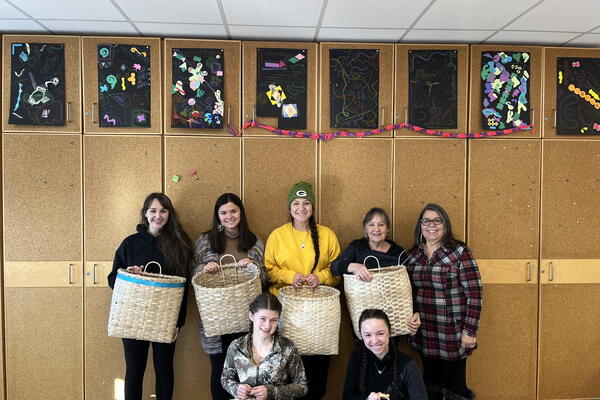
Indigenous Teacher Education Program (Community-Based)
Primary-Junior French as a Second Language Multi-Session (FSLM)