
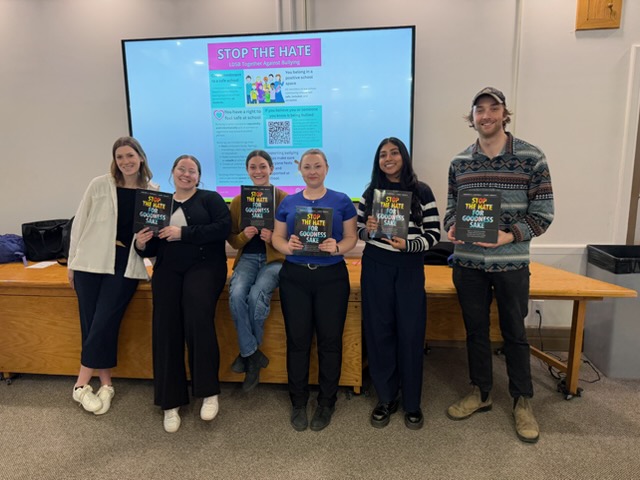
 On the last day of their alternative practicum with the Limestone District School Board, the room felt different. The work was done, the resources were printed, and the chairs were pushed back after one final session but no one was in a rush to leave.
That feeling stayed with Andrea Barrow, Equity and Inclusion Consultant for Grades 7 to 12. Over three weeks, she had watched a group of teacher candidates turn into a team, building something that would last well beyond their placement. What stood out was not only the final product, but how they got there.
“I could tell they were sad that it was over,” Andrea reflected. “And I was also sad for them, thinking there is no other time in your career that you’re going to be able to work as a group of teachers on a project like this.”
The group included Jamie Edkins, Keshiha Elamurugan, Mercedes Hall, Olivia Maltby, Alexis Shortt, and Madison Tate. Together, they took on a project that began with very few details and quickly grew into something much larger.
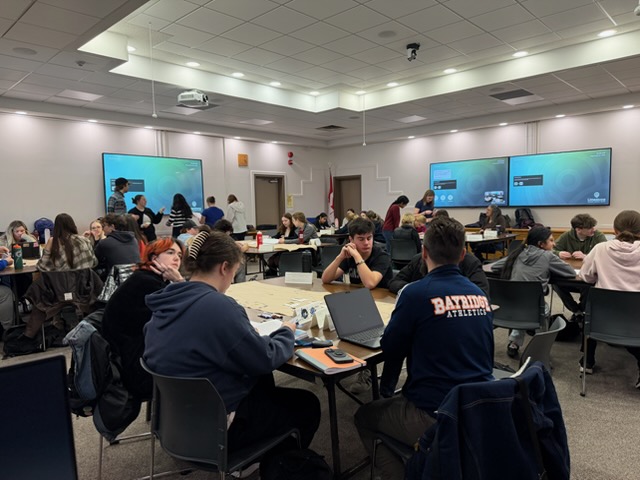 Andrea had a starting point. Years earlier, she had been trained on a Red Cross program called Beyond the Hurt, which focused on preparing high school students to teach younger peers. The program had since been shelved, but the core idea stayed with her. When this practicum opportunity came up, she saw a chance to bring it back to life. “This was something I had sitting on my shelf for a long time,” she said. “I just didn’t have the time to revise it. This group made it into something real.”
Instead of assigning small, separate tasks, Andrea gave the candidates space to take it on together. That work became a peer-to-peer anti-bullying initiative designed for Grades 6 to 8. The group created four lessons for Grade 6, four for Grade 7, and five for Grade 8, all built to be taught by high school students to younger peers. “It was designed so students could teach students,” Alexis explained. “That connection makes a difference. It’s more relatable. It’s more real.”
The lessons were grounded in what students in the Limestone District School Board are experiencing. Using board data and current research, the group focused on identity-based bullying and online behaviour. They explored how language impacts identity, how bias shows up in everyday interactions, and how quickly harm can spread through social media. 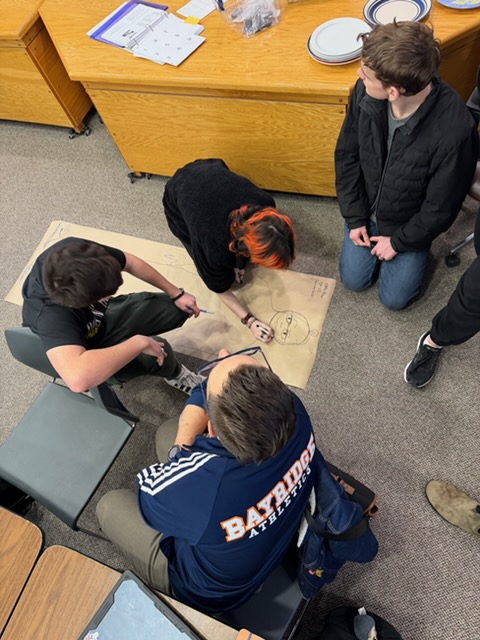
Some of what they learned was difficult to hear. “I was shocked by some of the things happening with younger students,” Alexis shared. “They’re so young, and some of the language they’re using is serious. It made this work feel even more important.”
Rather than avoid those realities, the group leaned into them. They chose to name issues clearly and give students the language to understand what is happening around them. “Bullying can get brushed off,” Madison said. “But when you start talking about hate, discrimination, identity, it changes how seriously it’s taken.”
The process itself was deeply collaborative. The teacher candidates worked in a large group, constantly sharing ideas, revising lessons, and learning from one another. “Working together made everything better,” Olivia said. “You could bring an idea, and someone else would build on it. It took the pressure off and made the work stronger.”
That sense of collaboration extended to their work with Andrea. The students described her as both knowledgeable and deeply invested in their growth. “She took the time to sit with us and go through every lesson,” Keshiha shared. “We don’t always get that kind of support. It made a huge difference.”
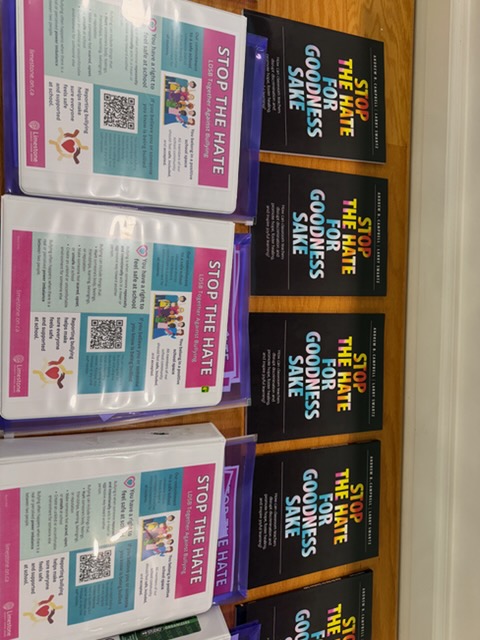
The practicum also included professional learning that shaped the direction of the project. Conversations around Black history and equity were woven into the work, alongside a key resource, Stop the Hate for Goodness Sake by Dr. Andrew B. Campbell. The group even had the chance to meet him, an experience they described as energizing and memorable.
As the lessons took shape, the candidates tested them in real settings. They had opportunities to test the lessons with students, including a trial run at LaSalle, which gave them valuable feedback on what worked and what needed to be adjusted.
“We were nervous going in,” Mercedes admitted. “But the high school students were incredible. They really got it.” Watching those students connect with the material was a turning point. “They weren’t just repeating the lessons,” Maddy said. “They were making them their own. They were using their own experiences. That’s when we knew it would work.”
For Andrea, that moment confirmed the impact. “They ran the entire training,” she said. “I sat in the back and watched. The teacher candidates and students were phenomenal.”
 For many of the teacher candidates, the experience brought both pride and a sense of letting go. “This program feels like our baby,” Olivia said. “We built it, and now we’re sending it out into the world.”
The impact went beyond the program itself. Several candidates spoke about how it changed their approach to teaching. “I’m more aware of the materials I use now,” Mercedes shared. “It’s already changing how I plan.” Others described it as a turning point in their learning. Several teacher candidates said the experience made them want to keep learning, with some now considering graduate studies.
At its core, the experience was about more than lesson writing. It was about building something meaningful together and seeing how that work can ripple outward. As the program begins to roll out across schools, its reach will continue to grow. Lessons will move from classroom to classroom, led by students who are ready to take on the role of educators themselves.