
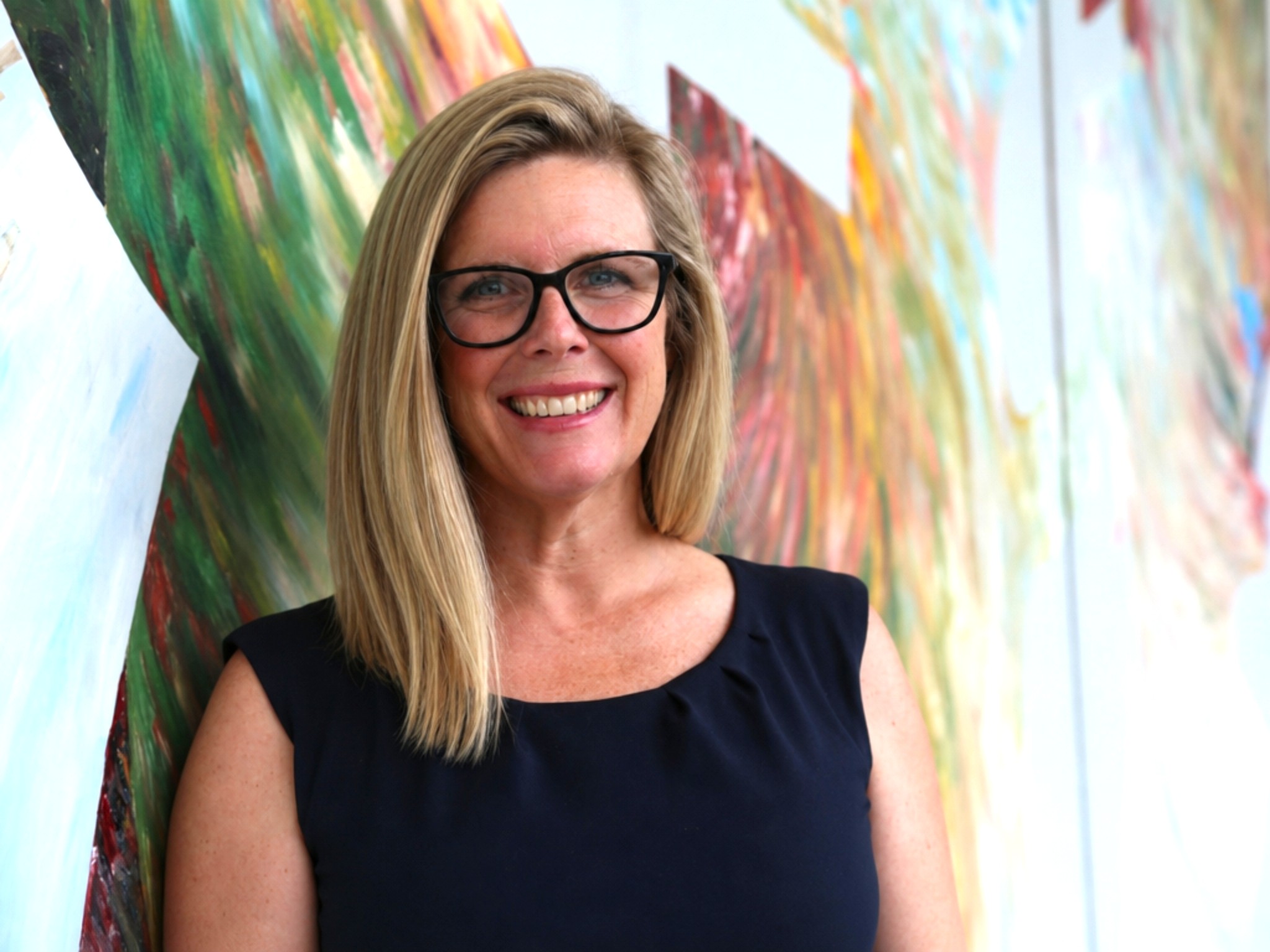
 What does it mean to be a lifelong learner in the teaching profession? In this episode of Popular Podagogy, newly appointed Associate Dean of Teacher Education, Holly Ogden, reflects on the power of relationships, curiosity, and growth in teaching and learning. She shares insights from nearly 25 years in education and discusses how these experiences will shape her vision for teacher education at Queen's University.
Dr. Holly Ogden (PhD, Queen’s University) is Associate Dean, Teacher Education and an Assistant Professor at the Faculty of Education, Queen’s University. Holly is a teacher, researcher, and musician who has taught in the ConEd, BEd and Professional Master of Education programs. Holly began her career teaching grades one through six with the Limestone District School Board and her classroom experience informs her research interests. She lives in Sydenham with her husband and two children.
Thinking about your professional learning?
Find out more about options for teachers at Queen's Faculty of Education.
Transcript
Theme Song
Popular pedagogy. Discussions that are topical and sometimes philosophical. Popular pedagogy. Popular pedagogy.
Chris Carlton
Hi there. Thanks for joining us and welcome to another episode of Popular Podagogy, where we try to bring big ideas in teaching and education to life. I'm your host, Chris Carlton, and this podcast is being brought to you by the Faculty of Education at Queen's University. Welcome to our podcast. In this episode, I am excited to be speaking with Dr. Holly Ogden, who is the newly appointed Associate Dean of Teaching Education here at the Faculty of Education, Queen's University. Holly has been committed to the teaching profession for nearly 25 years, and our conversation today will focus on the important topic of learning as a teacher. Holly began her career teaching grades one through 6 with the Limestone District School Board, and her classroom experience continues to inform her research and teaching interests. Holly received her Bachelor of Education from Queen's University, as well as her Master's in Education and PhD. Up until her new position as Associate Dean, Holly was an Assistant Professor at our Faculty of Education here at Queen's, teaching in the Con Ed, Bachelor of Ed, and Professional Masters of Education programs. If you want to discuss the topic of learning as a teacher, I think Holly is our go-to person. Holly, welcome to the podcast.
Holly Ogden
Thank you for inviting me and for such a generous introduction, Chris. I'm very happy to be here with you.
Chris Carlton
I didn't even mention all of your journals and all of your awards. I keep following you and it's amazing the accolades that follow you, which are so well deserved as well. So Holly, as I mentioned, you've taught in K to 6 classrooms, which I've done too. I think it's a wonderful experience. But you've also completed a PhD and taught teacher candidates in several different programs here at Queen's. From your experience, what are the most important things you've learned as a teacher and what keeps you learning today?
Holly Ogden
Thank you. That's a great question. The most important thing that I have learned is that teaching is at its heart about connection and about being in relationship with others. So when we're in relationship with our students, we're always learning about who they are, how they see the world, their readiness to learn, what they need, what they like. Nothing is ever static when we're spending our days with a group of human beings. And those relationships are what build trust and a sense of safety, which allow our students to take risks and share who they are and engage more fully in their learning. So I think relationships are key and strong relationships also ensure that students know that their voices are heard and that they're valued. Because of this, when we truly know our students, I think we can help them make meaningful connections to content. So like connections between who they are and big ideas and real world applications. And supporting that kind of learning requires us as educators to remain curious and responsive and to keep learning alongside our students. One of the biggest lessons for me has been recognizing how much I don't know. So whether my students are 8 or 18 or 38, they ask questions that I often can't answer. And I have truly learned that it's okay to say, I don't know, let's learn together. And I think that openness keeps curiosity alive for them and for me. I've also learned that we can't be perfect. So the work of an educator is never truly finished. There's always more to understand, always more needs to respond to, more growth ahead. So I think our work requires A commitment to show ourselves and others grace, like along the way in the journey of the work and of the learning. So I guess ultimately what keeps me learning is that desire to connect and to stay in meaningful, reciprocal relationship with others.
Chris Carlton
That word connection is so important to me as well. It's one of those things we connect to our students, we connect to nature, we connect all those things to curriculum. And without that, as you said, getting them to engage in the learning is really difficult unless you have that relationship, unless you have that connections.
Holly Ogden
Sorry, I know you have those relationships with your students and I know you connect them because they talk about you.
Chris Carlton
And as a science teacher, that remain curious is key to me, for our students and for teachers. And I really enjoy the idea that recognize how much you don't know. And you can celebrate that by saying, that's a great question. Let's discover it together. And I think that brings the teacher down to that level of, I'm still learning and I'm still loving what I'm doing. So I agree with all of those. And that commitment to a growth mindset, I think, if I want to throw that word in there. You've taught over 25 years in the education system, both as a teacher and educational instructor. We often talk about students as learners. We've got courses on it. We've got books on it. But what does it mean for teachers to see themselves as learners?
Holly Ogden
Yeah, thanks for asking. I really see this as an extension of what I just shared, but I say this in all of my classes, but teachers are learners first. So seeing ourselves as learners means recognizing that as educators, our expertise isn't about having all the answers, it's about being expert learners. So educators are constantly learning. We're learning about our students, the communities we serve, the evolving world around us, but we're also learning about the content that we teach, new initiatives, curriculum revisions, emerging research and technologies. And these aren't necessarily one-size-fits-all. So part of the learning is also considering how we can implement these in ways that best support the learners who are in our care. And at the heart of that is what you just mentioned, which is a sense of curiosity and an openness to wonder and being willing to ask questions, to notice what's unfolding in our classrooms, to admit when we don't know something and to remain genuinely interested in what we don't yet understand or what we don't yet understand, right? If we're paying attention. I believe that every day in the classroom offers new insights. And our students themselves are really excellent teachers, like not only in how they learn and behave, but in the feedback they give us, directly and indirectly, about what's working and what isn't working. I also think that for teachers to see themselves as learners requires humility. Right, and I say this to my first years a lot: if we ever get to a place where we think that we have nothing left to learn, it's probably a signal to pause and reflect, or maybe even reconsider our line of work, because education is always evolving, and we're all... always learning. So for me, seeing myself as a learner means staying curious and open to growth and modeling that in ways that gives students permission to take risks and learn alongside me.
Chris Carlton
I love that. I say I love that a lot. So but the concepts that you're coming up with and the ideas are very aligned to what I'm thinking as well. You and I both teach new teachers. And one of the questions that always comes up is, Chris, These are wonderful ideas. They're great pedagogy, but sometimes they get so caught up in just staying with what's happening in the curriculum, just doing their job as a teacher and the many hats that we have to wear. Could you give sort of an idea of how do we make sure we do stay curious? How do we make sure we take that opportunity to really become learners first when all the hecticness of teaching sort of comes around us and surrounds us. Does that make sense?
Holly Ogden
Yeah, no, it does. I think there's two ways that we can do that as educators. One of them is to use strategies that promote curiosity and wonder in the classroom and promote questioning. You can do a lot of work in literacy and across the curriculum. I've taught social studies for many years, and we have an inquiry process that is not linear, but the center of the inquiry process is getting students to learn how to formulate effective questions and what is a good question and how to ask questions. And then what do we do with those questions when we have them? That's inquiry. right? And I think one of the ways that we get really caught up in the curriculum is by looking at every little specific expectation and worrying about like, am I covering this on which day? How am I doing that? When in reality, if you look, I can speak to the social studies curriculum, it has these beautiful big ideas. And the big ideas are the heart of the learning and the whole purpose of the way that curriculum is structured is that we can take the big ideas and have students find a way to hook them with a provocation to get them engaged, but then let them ask the questions and then The teaching and learning can be, how do we learn that? Let's learn that together. Where can we look? What did we find out? Now what do we wonder? And that can actually be the learning in the classroom, right? It doesn't always have to look the way that we're expecting it to look, maybe because of the way that we were taught.
Chris Carlton
And again, it comes back to modeling, modeling that behavior and modeling that curiosity, that inquiry. In our science classes, we do, we use project-based learning a lot, which again creates that opportunity for curiosity where we don't know where it's going to go. And modeling that, it's all right. It's all right that we don't know exactly where we're going to end up, but the learning is going to happen around us. And we could get into a long topic because I know you're a big believer in cross-curricular learning. And that's when that curiosity and that inquiry really sets hold in the learning process. Holly, you're about to take on a new leadership role, which I'm very excited about. And that's as Associate Dean of Teaching Education here at our Faculty of Education. What are you most excited to learn as you begin this next chapter?
Holly Ogden
Honestly, Chris, I have so much to learn stepping into this role. It is a bit overwhelming, but in the best possible way. I would say what really excites me is the opportunity to understand the bigger picture of teacher education and how all the pieces connect beyond what I've experienced so far in my own classroom and program experiences. I am so fortunate to be stepping into this work with an incredibly strong team and so many supports. And I'm really looking forward to learning from my colleagues and to connecting with a wide range of stakeholders across the educational community. I'm just starting to understand how broad that educational community is. I'm also looking forward to deepening my understanding of how we can support teacher education through reciprocity and partnership. I really want to be working alongside the schools and school boards, communities, and just educators in the field in ways that are truly collaborative and responsive. I would love to gain so much more insight into how we can work together and support one another. So For me, this next chapter is really about learning how we can best support and prepare not only our pre-service teachers, but also the broader educational community. And ultimately, I'm just excited to keep learning through connection and through the relationships that shape this kind of work.
Chris Carlton
So our next episode of podcast will be learning as a dean.
Holly Ogden
Yes, absolutely.
Chris Carlton
We've talked about this before in terms of reimagining teacher education programming and many of the points that you made there. It's a collective, you're looking at it as a collective effort from all the different stakeholders. And you mentioned that cultivating community relationships and providing support for our TCs. And I think that's such an exciting aspect of your role to be able to initiate and build a lot of those things into the program. And so as As somebody that is part of the program and teaching in the program, I am very excited to work alongside you and learn from you as well.
Holly Ogden
Oh, well, thank you. I'm looking forward to, I'm looking forward to listening. You know, I have a lot of listening to do and I'm going to be making lots of notes and I can't wait to just be in the same room as so many different people and getting to see all the great things that everyone's doing that you don't always see when you're focused on your own teaching and your own work, right?
Chris Carlton
That would be another point. Learning as a teacher is to be listening as much as you're talking. So that's wonderful. Holly, this has been an incredible conversation. Thank you so much for taking time out of your busy schedule to talk with us. I'm looking forward to working with you, as I said, in your new role as Associate Dean of Teacher Education. I wish you all the best of luck and success.
Holly Ogden
Thank you. It's been really nice to be here with you. Thank you for having me. I'm looking forward to the work ahead.
Chris Carlton
That does it for another episode of Popular Podagogy. Again, thank you to our new Associate Dean, Dr. Holly Ogden. I hope you take the time to visit our podcast website and view some of the additional information available there. Josh, as always, where can our listeners subscribe to make sure they don't miss any of our Popular Podagogy podcasts? if you like what you hear, please subscribe to us on Apple Podcasts, Spotify, the CFRC website, the Faculty of Education website, and pretty much any place you get your podcasts. Please don't forget to check out our Queen's Faculty of Education website and search for popular pedagogy for additional resources. Well, that's it from myself, Chris Carlton, and our incredibly talented and resourceful podcast team of Josh Vine and Aaron York. Stay safe, stay healthy, and stay connected. And we will see you next time for another episode of Popular Podagogy.