
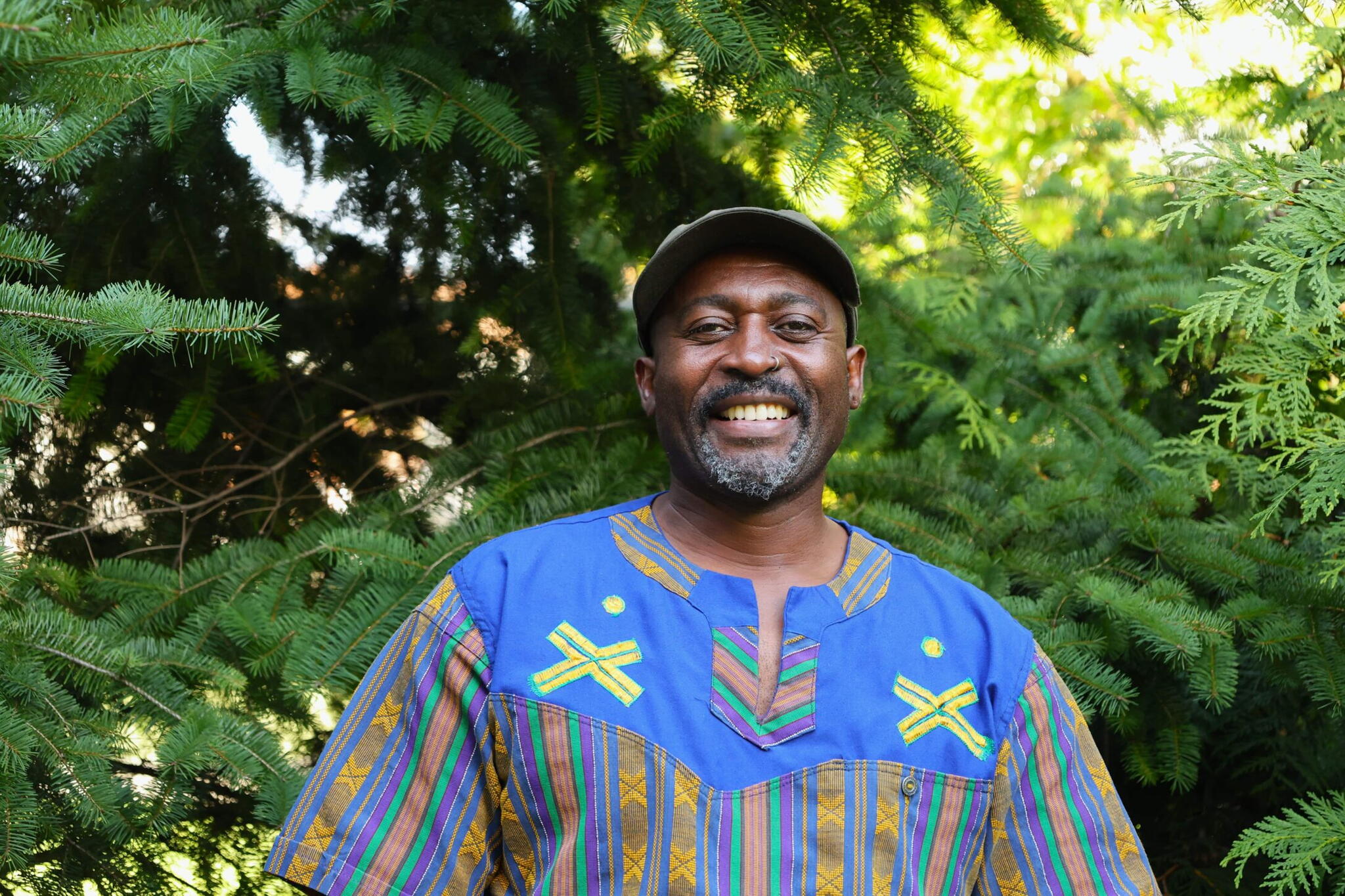
 In our February session of “The CCESC Speaker’s Series: The Power of Storytelling to Change Worlds”, Dr. Devi Mucina, Associate Dean in the Faculty of Graduate Studies and a Professor in the School of Indigenous Governance at the University of Victoria, delivered an insightful and evocative talk inviting attendees to reconsider how stories shape not only the past, but also how communities imagine and build their future together.
As an Indigenous Ubuntu from the Ngoni, Chewa, and Shone people of southern Africa, Dr. Mucina drew on African philosophical traditions to emphasize that identity is not individual but collective. “A person is a person through other people,” he explained, highlighting how relationships form the basis of knowledge, responsibility, and belonging.
His presentation was grounded in the concept of storytelling as an active, living practice. Rather than viewing stories as static recollections of the past, Dr. Mucina framed them as tools for “dancing futures into being.” He illustrated this through “Gule Wamkulu” or “the great dance”, a tradition of the Chewa people, which he described as both cultural expression and social dialogue. Through movement, dancing, ritual, and symbolism, communities reflect on current realities, address social issues, and imagine more equitable futures.
Additionally, Dr. Mucina views storytelling as deeply tied to memory and particularly social memory shaped by histories of colonization. He argued that many cultural practices are not lost, but rather “remembered” through collective memory. In his current work with Black communities in Victoria, he is exploring how such practices can support community governance, healing, and reconnection to cultural knowledge systems.
His approach to research also emphasizes ethical engagement with communities. Before starting his project, Dr. Mucina consulted with Indigenous elders and community members, searching for permission and guidance. This process reflects his commitment to community engagement, ensuring that storytelling practices are not imposed, but co-created with respect and care.
For attendees, the talk resonated on both academic and personal levels. Doctoral student Naziba Hoque described being drawn to the talk because of its connection to her own interests in storytelling and education. “The title immediately caught my attention,” she said, adding that she was particularly interested in how oral traditions shape collective understandings of the past and future. She identified Ubuntu as a key takeaway. “This idea emphasizes that our humanity and our visions of the future are shaped through relationships, community, and shared responsibility,” she stated. She also highlighted the significance of “Gule Wamkulu” as an example of how storytelling, ritual, and performance can foster inclusive ways of imagining the future.
Throughout the talk, Dr. Mucina challenged conventional academic approaches that focus primarily on analyzing the past or predicting the future. Instead, he proposed a more transformative question: “Can we begin living the futures we desire right now?”
By centring storytelling as a relational, embodied practice, Dr. Mucina’s work offers a powerful vision for education and community engagement, which goes beyond theory and into lived, collective co-creation.