
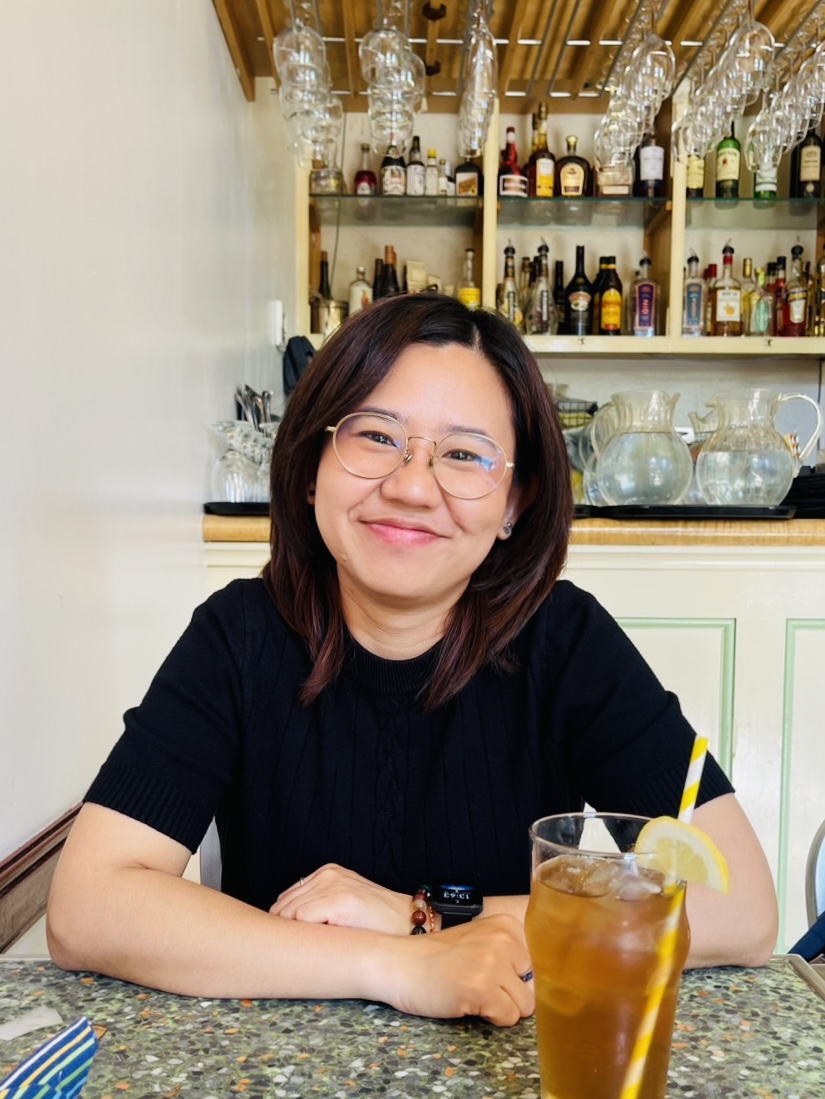
 Poonyawee Jirarattanawan began her academic journey studying physical therapy, driven by a desire to help patients move and heal. But in the second year of her undergraduate degree, she realized that by becoming a professor and teaching anatomy, she could extend her impact far beyond individual patients by empowering generations of students with the knowledge to care for many more.
As she moved into her master’s studies in anatomy, her vision sharpened but so did an unexpected challenge. While gaining research experience in the lab, Poonyawee found herself grappling with the realities of working with animals, an experience that weighed heavily on her wellbeing. It became clear that a lab-based path was not where she felt most fulfilled. The experience affirmed her passion for teaching and supporting students, strengthening her commitment to pursue a path in education where she could make a meaningful impact aligned with her values.
Fast forward a few years, and Poonyawee was thriving in an academic career at Mae Fah Luang University in northern Thailand, teaching anatomy. She taught everyone from nursing and physiotherapy students to medical, dental, and even traditional medicine learners.
“It was a very dynamic environment,” she reflects. “Each group of students had different needs, different levels, different ways of learning.”
In addition to teaching, Poonyawee, along with a small team, took on multiple roles: advising, mentoring, and leading workshops while also supporting student organizations and helping learners navigate academic and personal challenges.
Now a doctoral student at Queen’s Faculty of Education, she’s diving deeper into questions of student wellbeing and resilience in medical education. Drawing on her own experience with resilience training, she’s particularly interested in how these programs move beyond theory into everyday practice.
“Everyone talks about wellbeing,” she says. “But not many people are actually doing it in a way that changes the system.”
For Poonyawee, that system-level thinking is key. Her work doesn’t just look at students—it also considers the wellbeing of instructors and staff, recognizing that their experiences directly shape the learning environment. When educators are overwhelmed or unsupported, students feel it too. Her goal is to bridge that gap, using research to demonstrate the real value of investing in wellbeing initiatives.
Her path to Queen’s wasn’t accidental. With longstanding connections to the university and encouragement from colleagues, she saw it as the perfect place to grow her research skills and explore educational theory in depth. While her journey has included unexpected turns, including a recent transition to a new supervisor, she approaches it all with thoughtfulness and resilience of her own.
Outside of her studies, Kingston has offered a comforting sense of familiarity. “I like the vibe,” she says with a smile. “It’s not too big, not too crowded, and the waterfront is beautiful.” The biggest adjustment? The Canadian winter is a sharp contrast to Thailand’s warmth.
As she continues her PhD, Poonyawee remains focused on one central idea: creating ripple effects. Whether through teaching, research, or student support, her work is about amplifying impact. Helping not just one person at a time, but shaping systems that support many. If her journey so far is any indication, those ripples are only just beginning.