
In this episode of Popular Podagogy, host Chris Carlton dives into the complex world of sex education with Dr. Jacob DesRochers, an expert in sex education. They explore how educators can thoughtfully address sexual health, identity, and religious diversity in classrooms. This conversation offers insights on how teachers can create safe, inclusive spaces for students to make sense of their experiences while bridging the gap between school curriculum and diverse home values.
- Let's Talk about Sex (and Faith): Teaching about sexuality and health across religious and political lines Jacob's 2019 article in EdCan
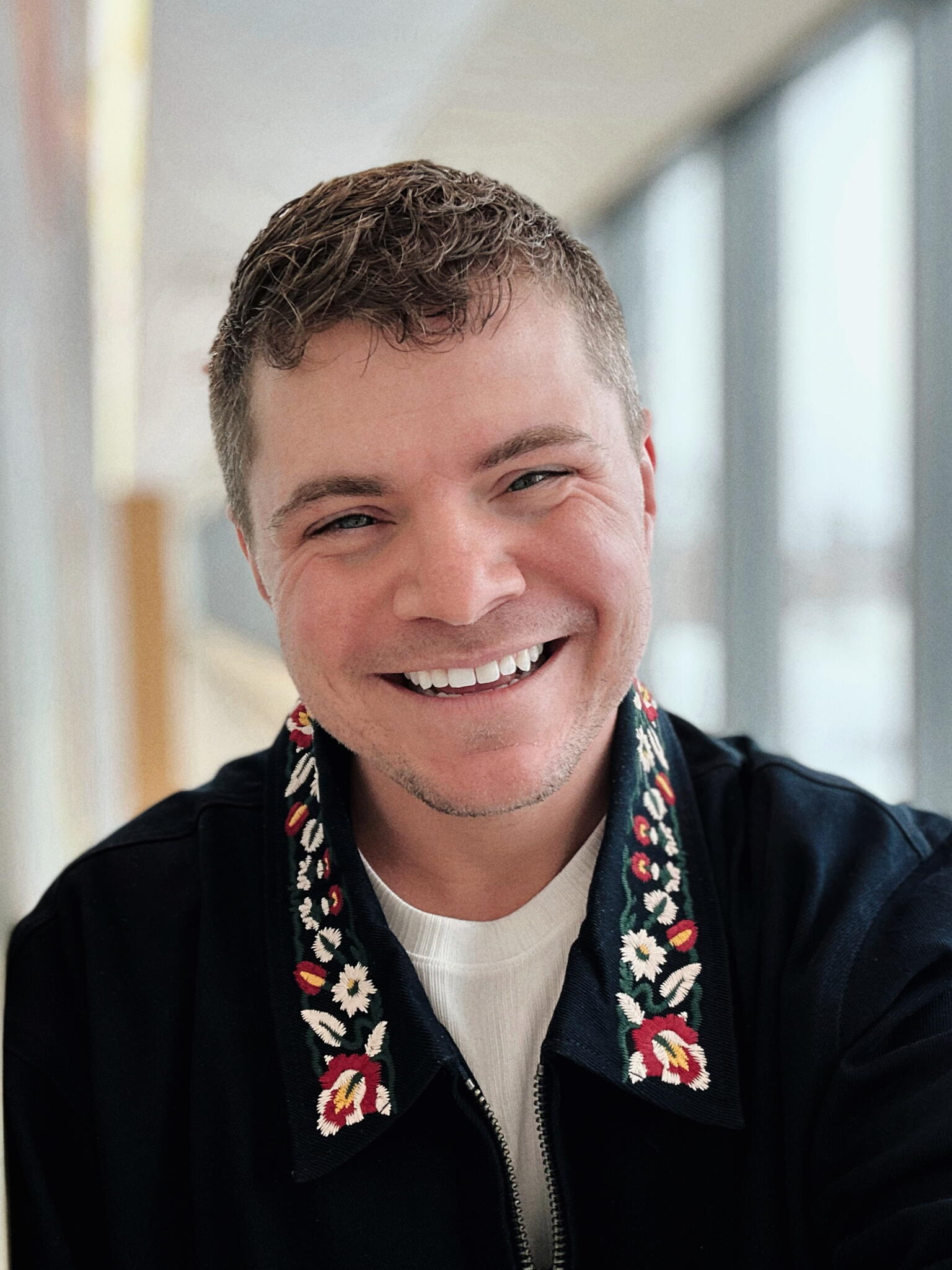 Jacob DesRochers (he/him), PhD is a researcher and educator focusing on the complex interplay between sexuality, gender, culture, and religion in education, particularly within K-12 settings. He is the Research Associate with the Queen’s-Weeneebayko Health Education Program in Queen’s Health Sciences, where his work supports community-grounded approaches to Indigenous health education and curriculum design. His doctoral research, supported by the Social Sciences and Humanities Research Council of Canada, examined how K-12 sexuality education curricula can intentionally engage religious diversity despite often seeking distance from religion. Jacob’s broader scholarship critically explores the political and moral panics shaping public debates and policies surrounding human rights protections, discrimination, and educational inclusion.
Jacob was the lead research assistant on Dr. Lee Airton’s project “Gender Expression” under Construction: How School Boards are Shaping Ontario’s Newest Human Rights Category (2018–2020) and later supported the launch of Gegi.ca, the first bilingual platform designed to help students and teachers in Ontario address discrimination based on gender identity and expression. Jacob collaborates with organizations, universities, and student groups to develop policies and educational initiatives that address gender and sexual violence prevention through trauma-informed and justice-oriented frameworks. He also serves on research ethics boards for Queen’s University and Canadian Blood Services. His scholarly commitments center on community-engaged research that interrogates how systems of power shape educational policy, practice, and everyday experience.
Content Warning: The episode contains a candid conversation about sex education and contains discussion of sexual topics. There is also a brief mention of sexual assault. Please listen (or read) with care.
Transcript
Theme Song
Talking about innovation in teaching and education, Popular Podagogy. Discussions that are topical and sometimes philosophical, Popular Podagogy. Popular Podagogy.
Chris Carlton
Hi there. Thanks for joining us and welcome to another episode of Popular Podagogy, where we try to bring big ideas in teaching and education to life. I'm your host, Chris Carlton, and this podcast is being brought to you by the Faculty of Education at Queen's University. Welcome to our podcast. In this episode, I am excited to be speaking with Dr. Jacob Durocher, who has a PhD in sexual education and curriculum theory and is currently teaching our Queen's University teacher candidates how to teach sexual education to their students, which in today's environment can bring up some unique challenges and opportunities for educators. Jacob is a researcher and educator focusing on the complex interplay between sexuality, gender, culture, and religion in education, particularly within the K-12 settings. His doctoral work, supported by the Social Science and Research Council of Canada, examined how K-12 sexuality education curricula can incorporate religious diversity intentionally, despite often seeking to distance itself from religion. Jacob has authored and contributed to many articles related to this topic, including the one titled, Let's Talk About Sex and Faith, teaching about sexuality and health across religious and political lines. It poses the question, is there a way for public schools to provide inclusive, comprehensive, and consent-based sexuality and health curriculum while remaining sensitive to the diverse beliefs and values of families? I am looking forward to our conversation. Jacob, welcome to our podcast.
Jacob DesRochers
Thanks so much, Chris.
Chris Carlton
Jacob, you have been involved with and collaborated with organizations, universities, and student groups to develop policies and educational initiatives that address many issues, including gender and sexual diversity in K-12 and teacher education. Can you please talk to us a bit about your research background and the research focus you have?
Jacob DesRochers
Yeah, that's a good question. Thank you. So I did my undergrad in religion and English back in 2012. And there I was interested in the Hebrew Bible and how biblical texts talked about gender and sexuality. And that followed me through to grad school. So in my master's, my first master's, I focused on biblical law. And then I had an epiphany that I didn't want to do that anymore. I didn't know where I was going to go with a biblical degree. I didn't know what religious studies was going to do for me career-wise. So I applied to the Faculty of Education at Queen's. And there I was interested in studying sexuality education in the context of religion and politics. I began working with Dr. Lee Ayrton. And then during that time, I completed first my master's in education. And that was around the repeal to the K to 12 sex ed curriculum in Ontario. So while I was working on my colloquium, which was one of the qualifying exams for your master's, Doug Ford, the premier, was repealing the sex ed curriculum. And then From my master's, I went into my PhD. I very much stayed within the same space. So I still studied religion. That master's degree in religion proved to be fruitful. And I kept that as a through line across all my work. And I studied how religion is present in K-12 sexual health education, and how religion and culture informs the knowledge we have about sex, the way we engage in sexual decision making, and how our beliefs and practices are informed by the communities that we're in. And so that's sort of my academic work up until this point.
Chris Carlton
I love the fact that you studied gender and sexuality in the Bible. and tied it into your religious, both your undergrad and master's. That must have been very interesting. I was, by the way, I was around when Doug Ford did the revamp there, so I can attest to the challenges that teachers had or the confusion we had actually during that time. So I'm glad that you talked about that as well. I mentioned that you are currently teaching our Queen's University teacher candidates how to teach sexual education to their students, which is such a big question. Now, I am a few, okay, several decades older than you, but I don't remember much sexual education being taught in my elementary school experience at all. I do remember sex ed in high school, feeling very awkward and uncomfortable for us as students, and looking like it was very uncomfortable for our teachers as well. I want to talk about the way you teach sex ed instruction to our teacher candidates now, but can we start with the question, How did you learn about sex? Because when we talk about students coming into the classroom, they're already coming with some knowledge and it's different for everybody. So I'd be interested to know how did you learn about sex?
Jacob DesRochers
That question about how did I learn about sex is the same question that I pose to my students. And I think it's in part of why we have the discomfort around sexual health education. So For me, I remember coming home as a child, sitting around the dinner table with my mom and saying quite confidently, I know how babies are made. And I saw the intrigue on my mom's face and my dad looked a little bit puzzled. And then I proceeded with like the salacious details of an erotica novel. And I told them exactly how I imagined babies to be made. And both to my surprise and their horror, that's not how babies are made. But it was very much part of like this sexual knowledge world building that was happening in my life. The boys on the playground had older siblings, had access to like content or information that I didn't. And then we would come together on the schoolyard and giggle and laugh about it and kind of share what we knew or didn't know. And that was the 1st place, one of the first places that I learned about sex. I think the second that's more present is the scene in Titanic. I remember tiptoeing out to the living room one night and turning on the TV and the VHS was still in. And there was like the scene of Rose laying on the couch being painted. And that was like also very much pressed into my mind. I was like, oh, a body, a naked body, that must be sex. So those are two of the most pressing memories, I think.
Chris Carlton
And then fast forward to today's day and age where students are inundated with information that is starting to form, rightly or wrongly, form their understanding of sexuality. So I can, when I ask you, how are you preparing our new teachers? It's for me as well, because this is such a huge question. How are you preparing the new teacher candidates to be able to teach this incredibly important topic to their students, especially when they've got all of these new ideas or all of this information regarding the topic, including misconceptions and falsehoods? So how do you teach the teacher candidates to teach this?
Jacob DesRochers
So when I open up my classes on sexuality education, like I said, the first question is how did you learn about sex? And I model for them the story that I shared with you just now with a little bit more detail and a little more flair, just to like invite them in, show them that, you know, this is a fun conversation. I'm not uncomfortable. I'm not embarrassed to talk about sexuality. I'm not ashamed to talk about the ways I was right or I was wrong. And we're in this together. And then I invite my students to pair and share or talk amongst their table group. And I observe sort of like the rise and fall of excitement. You hear a lot of like, me too's or I didn't learn that at all. And then we come together as a class and I welcome students to share their experiences. And in large part, across the years that I've taught this, it's been pretty much the same thing. students either, like you had said, didn't learn about it at all, got their information from peers, got their information from the media in some way, whether that be Netflix's Sex Education or a teen magazine or TikTok. And that's sort of the starting point in which we learn together. This recognition that we have big C curriculum that's sort of governing what our sexual knowledge is supposed to be, but then an appropriate recognition that in all the places that we're learning about sexual health education, that we're talking about sexual decision making, that we're talking about relationships, it's not the classroom. the students aren't naming the classroom. What they name in the classroom is the absence and the discomfort. And then everything else is about all the places that sexual knowledge intersects. And I think that for me is the most important starting point. That our students are already entering the classroom with tacit knowledge, this information that they have about themselves and their relationships, their bodies and the world around them. And that is informing what they bring into a classroom. And in the classroom, the responsibility there is for us to tease out what's going on with that information.
Chris Carlton
And I love that, explaining it that way. Do you still have teacher candidates that are just that uncomfortable with talking about sexual identity, sexual information? How do you sort of help them overcome that uncomfortableness?
Jacob DesRochers
Yeah, I am. I do, and it's I think it surprises me every time because I'd like to think that we're in a space where given all of our access to this knowledge, there would be less discomfort. And I know that's naive. I think there's a bit of there's a bit of like personal want and desire there for the education experience to be more comfortable for both myself and for them. And so I do a lot of world building where I imagine this to be easier. But I think a lot of the time when the discomfort arises, it's around who the student imagines to be responsible for this education. And a lot of the times, the challenge that I receive from the teacher candidates who are struggling with this is that sexuality education belongs in the home. Sexuality education is the role and the responsibility of the parent. And I pause and I really hold space for them to share those feelings. And then we do a poll of the class and we ask the class, Is this congruent? Does this align with what your experiences are, including the person that's raised it? And by and large, the answer is always no. The answer is always no, my parents were uncomfortable to talk about this. We didn't talk about it. No, my teacher wasn't well supported to have this conversation. No, the resources didn't align with what I needed as XYZ student of XYZ experience. And so that disconnect between where we believe sex education should occur, including the students who are uncomfortable in posing challenges to the lesson, still arrives at the same endpoint, that we all believe in some way that should be taking place. And we're all recognizing that it's not meeting whatever criteria we have individually or collectively.
Chris Carlton
It's a quick note on that. I remember my dad's 2 minute sex ed talk with me and not enough information to guide me in any way. So I pushed him out. And I like that, and you said this in one of your articles too, the whole idea is to support the personal health and well-being of our students. And when teachers get that in their mind, it sort of takes over the idea, yes, we need to be able to talk about everything in our class for the sake of our students. And I know teachers are very student focused. And if we keep that focus in front of us, our uncomfortableness hopefully will decline as well.
Jacob DesRochers
Yeah, I agree.
Chris Carlton
I'm going to go back to your article, Let's Talk About Sex and Faith, because I absolutely loved it. You talk about 3 strategies for maintaining a healthy and accessible school community that supports students from socially and religiously diverse backgrounds within a sexuality and health program. And one of the strategies is values. You write, effective, comprehensive sexuality and health education should invite students to engage with their values, beliefs, and attitudes towards their own sexual health, which I think is so important. So from your research, how can K to 12 sexuality education curricula incorporate religious diversity?
Jacob DesRochers
Yes, that was much of, and I was surprised. I was surprised that the feelings I had as a master's student followed me into my doctoral work. I thought that my views on sexual health education would change more broadly and that I'd move away from perhaps the work that I was doing at the time when I was a master's student. But I really follow this relationship between parental rights discourse and what we're seeing in the media and in conversations about sexuality education, and then what is or is not present in school curricula. And by and large, what is absent from K to 12 sex ed in Ontario is representations of culture and representations of religion. And so I think sex ed takes a biomedical approach to well-being. The information that's shared there is about like scientific health. Like it's about, you know, what needs to be, it's about like risk mitigation, disease prevention, like that sort of, that's sort of the vein in which we operate in when we think of traditional comprehensive sex ed. But what we were seeing in debates about sexual health education was things that to you and I might seem simple as the absence of love. Like Ontario's HPE curriculum didn't have the term love. And parents were saying, we think, we believe that central to sex and central to relationships is love. And that is incongruent. It is not aligning with the beliefs that we're teaching at home. And so in my doctoral work, I began to imagine what would it look like for the curricular prompts that we see in the HPE curriculum. So the moments where a teacher, it's modeled to a teacher, how they communicate with a student and also what the desired student response would be. What would it be like to imagine those as like tangible sort of cultural interactions. Because I think what we have in the curriculum right now is devoid of that meaning making. It imagines a student that is seemingly blank. They have very little qualities to themselves. It's just like a boilerplate. Here's A prompt, here's an answer. But we know that our students are way more rich and nuanced and they have texture and experience and relationship that would come into the classroom exchange. And so I begin to imagine what those interactions might look like, what those conversations might look like for a student to say, in my congregation, in my community, this is what I've learned. and this is how it aligns or does not align with what's being taught in the curriculum.
Chris Carlton
Do you think those type of questions, the tangible cultural interactions, does that make teachers nervous again in terms of opening up a topic that they might not be able to speak to directly or have the expertise on?
Jacob DesRochers
I think so. I think What I wrestled against when I was sort of conceiving of new ways of doing sexual health education was what were the reasonable expectations of an educator. And I think the desire is not for the educator to be a cultural or religious expert. The desire is for the educator to afford space for the student to make meaning of their world and to help that student discern between practices that they might be inheriting from their culture or their faith and the information that they're receiving within the curriculum. And so, for an example, as a youth, I learned that prayer would make me clean. And that if I prayed, I would have the divine grace of God and that I would be protected. And then I was assaulted as a youth, had an experience with an STI, and I didn't talk to an adult about it, but instead I prayed because I thought prayer would make me clean. There was a disconnect between the information that I was experiencing in my youth group where we were talking about things like sex, but on the basis of abstinence, And we were talking about things like purity, again, on the basis of abstinence. And they were using language like clean and unclean. And my barometer for well-being was that this thing has happened to me and I am unclean. And so what does that look like in the context of K to 12 sex ed curriculum that teaches us about STI prevention, about testing? And how does that align with young Jake's notion of like bodily autonomy, of well-being, of health access? Like what would it have looked like to have information that could hold these two things together and give me perhaps the tools and resources to action them a little bit more appropriately?
Chris Carlton
I love that you said afford space for students to make sense of their world, because that brings it all into perspective. We're just opening up a conversation and providing an opportunity for them to actually grapple with some of their own information as well. I think that's brilliant. Another strategy you write about in your article is engaging parents, which is huge for me. I'm a science teacher and we talk about home connections constantly. And you talked to specifically consider how to encourage open communication with your students and their families. So how should teachers be communicating with parents about these topics?
Jacob DesRochers
Yeah, that's, it's one that I've, I keep coming back to in my work and I, and I've come back to that a lot, especially now as a parent myself. I have a son who is 3 1/2. He proudly announces. And I think a lot about, with this awareness of debates about sex ed sitting around where sex ed ought to lie, who's responsible there? I've shifted my language from parent to kin. And I think a lot more collectively about kin relations. So That includes those who I name as family, those who I've selected to be in my community and hold responsibility for me and I hold responsibility for them. But also in faith communities where there's larger collective decision making. So one of the things that I learned from my Masters of Education was that while my participants who were all from one evangelical community were talking about sex ed, belonging in the home, that was a belief that was true for all of them. They used home and church almost interchangeably. There was a notion that the people within their congregation also had a collective responsibility to teach their children, to hold the same beliefs as true, regardless of where the learning was taking place. And so now when I engage with this notion of parent, I think about the quality of this collective responsibility that might lie between different relations. And I think the first point is a recognition that a student might have multiple points of connection. And so inviting the student to begin to think about who it is that they're talking with. Where are they getting their information from? Is that a safe source for information? What does a safe adult look like for them? And then at the same point, inviting parents, caregivers, community leaders, community partners to ask those same questions. Where is the student getting information from? What does a safe person look like in the life of that student to have these conversations? And that's a starting point of these conversations, both for the student, for the adult, for the teacher, is to think about where does this information emerge and which sources of information are being shared in which pocket. I don't think my parents had a full awareness that my youth group was doing a lot of heavy lifting with sexual health education. Way more than the two-minute conversation that you had with your dad or the three-minute conversation that I had with my dad. Does that answer your question? Did I deviate too much?
Chris Carlton
It does. And It does. And I really like that multiple points of connections. Making sure that we take a look at all the different people that are influencing our students' decisions and conversations. This has been amazing, Jacob. I am so happy that you came on and that you're brave enough to talk about these topics because it's something that we as teachers are constantly thinking about. but often don't have the resources or the confidence to guide our students in the right way. So thank you so much for doing that. I'm going to end off with one question that we traditionally do with our guests, and that is, what do you hope is the biggest takeaway for our audience? In just a couple of sentences, what do you think is the biggest takeaway that you want them to take from this?
Jacob DesRochers
I think the biggest takeaway for me is that our students aren't devoid of understanding. They are coming to us with sexual meaning making, with desire, with knowledge about the world around them, their bodies, their relationships, their experiences. And our responsibility as educators, curriculum makers, leaders, is to be a safe space for them to land and to begin to compartmentalize the knowledge that they have. about those things. And I think sexuality education will be more effective if we focus on being a space for students to make meaning of what they already know against what might be deemed the appropriate information for them to learn. That there's more of like a collectivism here. It's not a student devoid of of information. It is a student with information, and we're saying, yes, and, yes, maybe. Or, that's not quite right, but let's tease out where you learned that from. And I think once we begin having those conversations, we can arrive at a place that's a little bit more fruitful for the work that needs to be done going forward.
Chris Carlton
So I've taken a ton of notes so far. And two of the things that I wrote down right at the beginning were start the conversation in a forward space for students to make sense of their world, which is what you were just saying there. And I think that is such an important message to our listeners as well. Jacob, this has been amazing. Thank you so much for taking the time out of your busy schedule. I'm positive that our conversation is going to continue on after this podcast, because I'm really excited about the work that you're doing. So thank you so much for being here today.
Jacob DesRochers
Thank you so much, Chris. I appreciate you.
Chris Carlton
That does it for another episode of Popular Podagogy. Again, a thank you to our amazing guest, Dr. Jacob Desrochers. I hope you take the time to visit our podcast website and view some of the additional information available there. Josh, as always, where can our listeners subscribe to make sure they don't miss any of our popular Podagogy podcasts? if you like what you hear, please subscribe to us on Apple Podcasts, Spotify, the CFRC website, the Faculty of Education website, and pretty much any place you get your podcasts. Please don't forget to check out our Queen's Faculty of Education website and search for popular pedagogy for additional resources. that's it from myself, Chris Carlton, and our incredibly talented and resourceful podcast team of Josh Vine and Erin York. Stay healthy, stay safe, and stay connected, and we will see you next time for another episode of Popular Podagogy.