
Samson Adebayo’s journey as an educator began in Nigeria, where the early years of his teaching career tested his resilience. Working in independent schools, he faced high expectations and limited support while managing classrooms with students with diverse learning and behavioural needs. “It was extremely difficult at the start,” Samson admits. To overcome these challenges, he immersed himself in online courses on classroom management, anger management, ADHD, and behaviour support. Slowly, he gained confidence and control, tools he would later carry with him across continents.
Driven by a desire to expand his horizons, Samson made the life-changing decision to move to Canada. Adapting to his new home came with its own set of challenges. Canada’s cold winters caught him off guard. “No matter how prepared I thought I was, the reality hit me hard,” he recalls with a smile. Simple tasks like navigating public transit proved tricky as he adjusted to using Google Maps to find bus stops and buildings. And then there were the mysterious static shocks that left him wondering if something was wrong, until he saw others experiencing the same phenomenon.
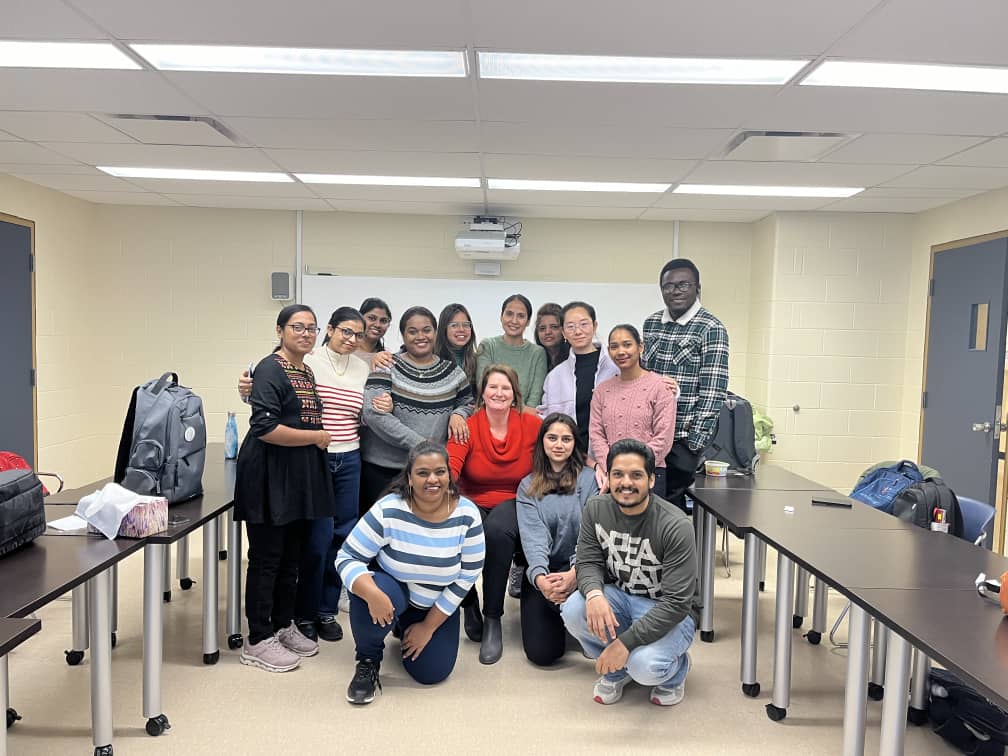
Knowing he needed the right preparation to succeed in a Canadian classroom, Samson enrolled in the Internationally Trained Teachers program. He sought firsthand experience of teaching strategies, technology integration, and classroom environments unique to Canada. “What I had learned online was fascinating, but I needed to experience it in action,” he explains.
During the program, Samson found valuable support that shaped his journey. He speaks warmly of Melissa McCormick, his first Canadian instructor at Queen’s School of English, whose encouragement and patience helped ease the transition. Melissa’s efforts to make new teachers feel welcome, including organizing campus visits, left a lasting impression. “She is truly my model teacher and has profoundly influenced how I teach,” Samson shares. Other instructors like Stephanie Fox-Comery prepared them to foster safe and inclusive classrooms.
Shortly after entering the teaching workforce in Canada, Samson’s path took an unexpected but welcome turn. Though he initially thought he would wait a year to apply, he was notified that the Federal Skilled Worker stream had opened up for teachers. After creating his profile on the IRCC website, he received an invitation just three days later. “I had no idea invitations were even being sent out,” he says with amazement. Receiving permanent residency this early was a milestone and a sign that his journey was heading in the right direction.
Now teaching middle school in a rural Manitoba community, Samson thrives in the supportive Canadian education system. What stands out most to him is the collaboration and resources available. He works closely with resource teachers, school psychologists, principals, and external supports who help him understand and meet the diverse needs of his students. This network is essential, especially given the behavioural challenges and family difficulties many of his students face. “Their support makes the work easier,” he acknowledges gratefully.
Reflecting on his journey, Samson offers encouragement to internationally trained teachers considering a similar path. “This program is a great place to start,” he says confidently. It prepares teachers for the differences in curriculum and classroom dynamics, helping turn initial overwhelm into success. Most importantly, the instructors go the extra mile to share resources and support every step of the way.