
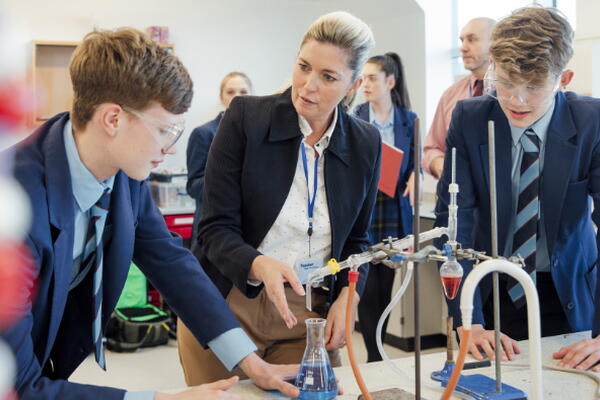
CONT952: Teaching Chemistry in Grades 11 and 12
How can we connect the curricular competencies and content of the BC chemistry curriculum with life experiences and opportunities for our students in a meaningful way? How do learning theories align with pedagogical strategies for instruction and assessment? What are the challenges and benefits to teachers and students of using a wide range of technologies in our learning environments?
In this course, you’ll have the opportunity to explore the chemistry curriculum and various teaching strategies, including demonstrations and simulations, hands-on lab activities, and the use of AI platforms. You'll apply authentic and effective formative and summative assessment strategies based on the principles of backward design to create tools for reporting student achievement of curricular competency skills and content understanding. You'll collaborate with course colleagues to create activities and assessments to broaden your knowledge of the learning cycle. You will also explore the concepts of cognitive load theory, reflect on your teaching practice, and look at ways to develop and promote inclusion, equity, and the First Peoples’ principles of learning.
Learning Outcomes
What You Will Learn and Do
In this course you’ll have the opportunity to
- examine pedagogical strategies that promote equity and inclusion in a diverse learning environment
- consider the structure and content of the BC Senior chemistry curriculum
- reflect on how embedding curricular competencies influences planning for instruction
- apply the fundamentals of backward design to generate lessons, assessments, and activities that align with the basics of UDL and First Peoples’ principles of learning
- create lessons and assessments that exemplify strategies that support equitable learning opportunities for all students
- explore the use of digital technologies and AI modalities that support teacher instruction planning and student development of a deeper understanding of the interconnections between what they are learning and why
Assessments
Module 1
Supporting Students in a Diverse Learning Community
Module 2
Exploring the Curriculum and Using Backward Design
Progress Update 1
Module 3
Learning Through Inquiry Instruction
Module 4
Planning Lab Activities
Formative Assessment
Module 5
Embedding First Peoples Principles of Learning into Pedagogy
Progress Update 2
Module 6
Integrating Technology, Simulations, and New Media
Module 7
Digital Portfolio of Resources
Summative Assessment