
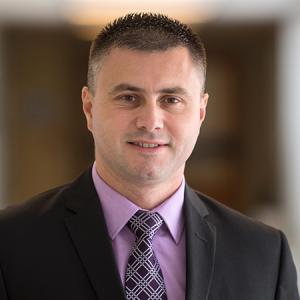
 For Dr. Benjamin Kutsyuruba, research into wellbeing is all about understanding how the people who make up education systems affect one another, from students in K-12 schools to teacher candidates, practicing teachers, and the leaders who support them.
Kutsyuruba, a professor in the Faculty of Education at Queen’s University, describes this as a pipeline of wellbeing. His research follows wellbeing across the education system, exploring what supports are available for education stakeholders at different stages and how those supports can build healthier schools and stronger educational communities.
His work starts with a simple premise: wellbeing is multidimensional, and supporting it requires more than focusing on one part of a person’s experience.
Looking at the whole person
Kutsyuruba’s recent research, with colleagues from University of Saskatchewan, UBC, and Carleton, centred on teacher candidates’ wellbeing capacity. They examined how teacher education programs across Canada support wellbeing across nine dimensions: emotional, intellectual, occupational, spiritual, physical, social, cultural, environmental and financial wellbeing.
The project began with a systematic review of the literature and an environmental scan of teacher education programs across Canada and the United States. The research team then surveyed teacher education administrators and teacher candidates across seven Canadian sites, gathering responses from nearly 40 program administrators and about 670 teacher candidates.
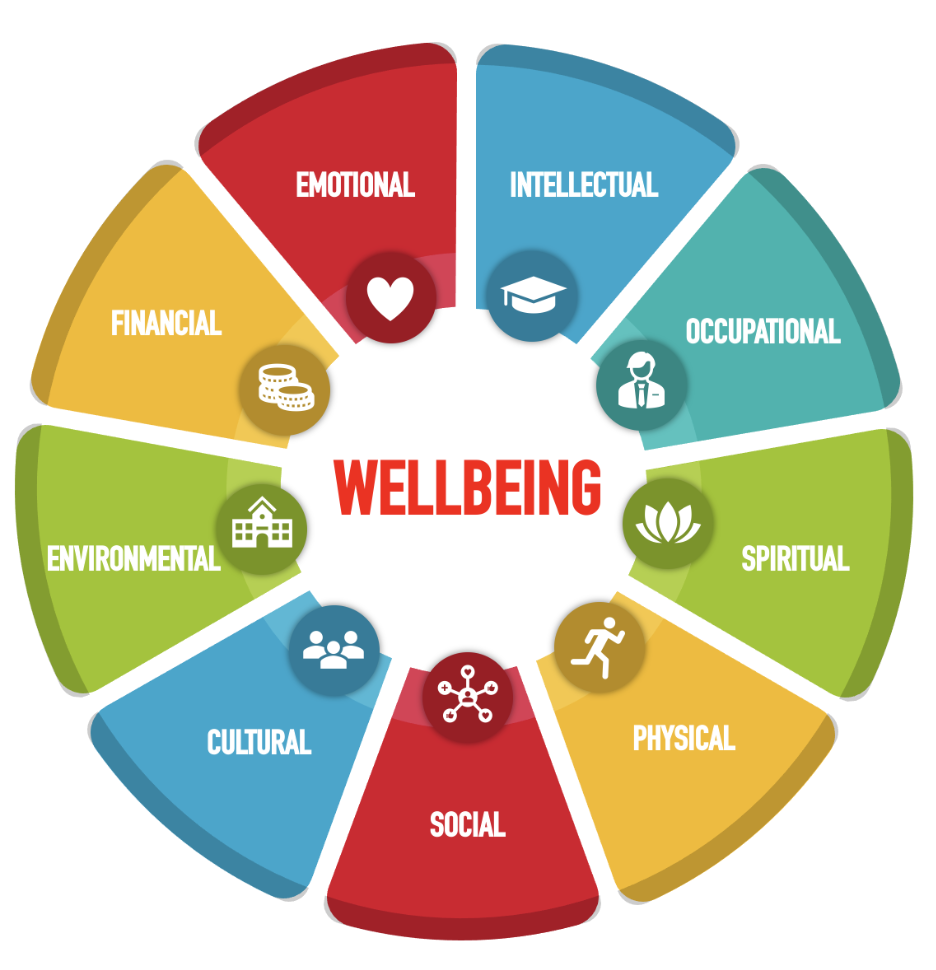 The nine dimensions offer a broad view of wellbeing. Emotional wellbeing considers how people understand and manage their emotions. Intellectual wellbeing looks at opportunities to build knowledge and expand perspectives. Physical wellbeing includes sleep, health, and nutrition. Social and cultural wellbeing consider relationships, belonging, traditions, values and connections across cultures. Environmental wellbeing looks at how the spaces where people study and work affect their experience. Occupational wellbeing focuses on professional life, while financial wellbeing considers the ability to manage financial resources. Spiritual wellbeing can involve a connection to something beyond oneself, whether that is faith, nature or another source of meaning.
The research revealed a notable gap between perspectives. Program administrators tended to have a more positive view of how well their programs supported teacher candidates’ wellbeing than the teacher candidates themselves reported. For Kutsyuruba, that difference points to the value of listening directly to the people experiencing a program, rather than relying solely on an institutional perspective.
Mentoring as a source of wellbeing
Mentoring is another major strand of Kutsyuruba’s research, and it has become closely connected to his work on wellbeing.
He first became interested in mentoring during his master’s research, when he examined teacher supervision and mentoring in Canada and Ukraine. Since then, his passion for the study and practice of mentorship has grown exponentially. Research-wise, over the years, I have undertaken studies of mentoring in relation to the early career teacher induction, attrition and retention, research mentoring, early career faculty mentoring, and most recently mentoring for wellbeing - exploring and enhancing ways to offer psychological and emotional support and providing safe and trust-full spaces for mentees (and mentors) to grow and be well.
In his largest-to-date pan-Canadian study, with Keith Walker, Kutsyuruba explored how mentoring could help address teacher retention during the first five years of the profession. That research found a range of approaches across the country, including government-mandated programs, teacher federation initiatives, school board and school division programs, and hybrid models. It also revealed something that would help shape the next stage of his research: mentoring could have an impact on the wellbeing of beginning teachers.
That connection led Kutsyuruba and his colleagues to explore mentoring specifically as a support for wellbeing. Considering a research gap on the positive impact of mentoring on wellbeing, in his role as a Perspectives on Mentoring book series editor with Emerald, Kutsyuruba prepared a call for chapter proposals, hoping to get enough submissions for one book. The response from researchers across the professions was striking. A call for book chapters on mentoring for wellbeing generated more than 100 submissions, ultimately leading to three books examining mentoring for wellbeing in schools, higher education, and professions and disciplines ranging from health sciences to business and aviation.
Kutsyuruba describes mentoring as a developmental relationship that helps people build expertise and confidence. His research asks how that relationship can also help people develop their capacity for wellbeing. Mentoring for wellbeing can grow human relationships by providing psychosocial supports to help individuals navigate personal and professional challenges, get connected to others, improve their overall quality of life, and enhance their mental and emotional health. Now a President of the International Mentoring Association (IMA), Kutsyuruba hopes to advance the research and practice of mentoring and continue growing connections across academe, industries, disciplines, differences and locations for IMA to become a global hub for mentoring community.
From teachers to leaders
The next stage of the pipeline moves into school leadership. Kutsyuruba has worked with colleagues on the wellbeing of school principals and the role of positive leadership in creating conditions where teachers and students can thrive. Their work draws on positive psychology and positive organizational scholarship, and explores how leaders can cultivate their own wellbeing while supporting the wellbeing of others.
One framework developed through this research is a four-part model built around purpose, presence, passion, and play. Purpose is connected to having meaning and direction. Presence involves being available and approachable, both physically and relationally. Passion is about engagement, creativity and bringing energy to leadership. Play creates space for human creativity and renewal.
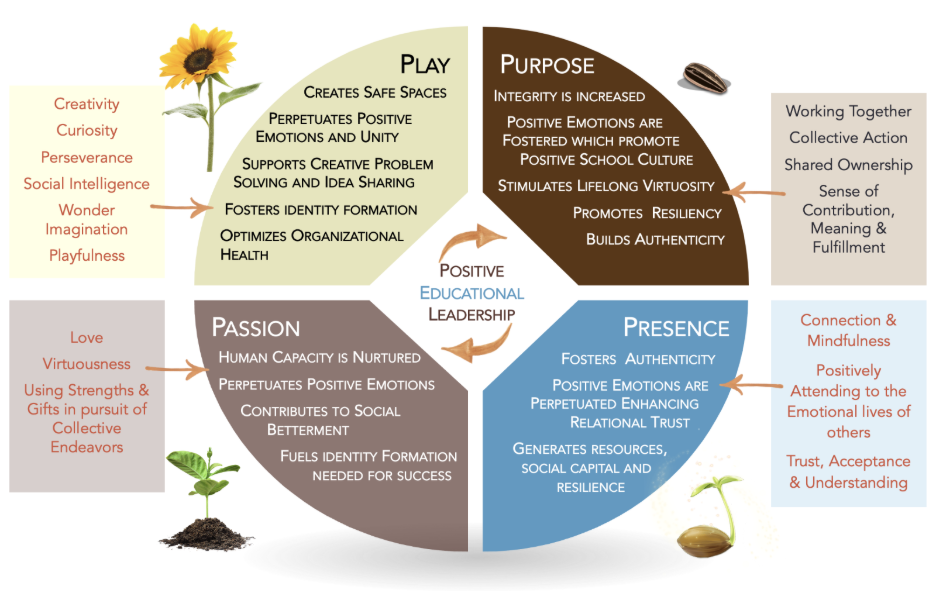
Together, the four elements offer a way of thinking about leadership that extends beyond the traditional focus on tasks, performance and organizational outcomes. The wellbeing of the leader becomes part of the broader health of the organization.
Kutsyuruba’s research also connects leadership with values like trust, hope and compassion. Recent projects with colleagues are examining the role of educational leadership in cultivating hope, as well as the role of compassion when schools and educational systems are leading through difficult times.
The result is a research program that keeps widening its lens while maintaining a common focus: how people in education are supported, how they support one another, and how those relationships affect wellbeing across the system.
Research that grows with people
That same philosophy shapes Kutsyuruba’s approach to graduate supervision.
His students study an unusually wide range of topics, from mentoring and leader identity to the experiences of teacher candidates with disabilities and the experiences of police officers navigating mental health. Rather than expecting students to fit neatly into one research area, he describes his supervisory approach as adaptive, responding to the developmental needs of each student as their research and confidence evolve.
Kutsyuruba says supervising students has introduced him to new research topics and pushed his own thinking in unexpected directions. Students may arrive with an initial area of interest and discover connections to other fields as they engage with the literature and develop their projects. Their questions, in turn, can open new directions for his own research.
That intellectual exchange reflects the larger idea behind his work. Wellbeing in education is not a single intervention or a program that can be neatly checked off a list. It is a network of relationships and supports that extends across people, professions, and stages of an educational journey. From the student sitting in a classroom to the teacher beginning a career, from the experienced educator to the principal leading a school, Kutsyuruba’s research asks how each part of that system can contribute to a stronger culture of wellbeing.