
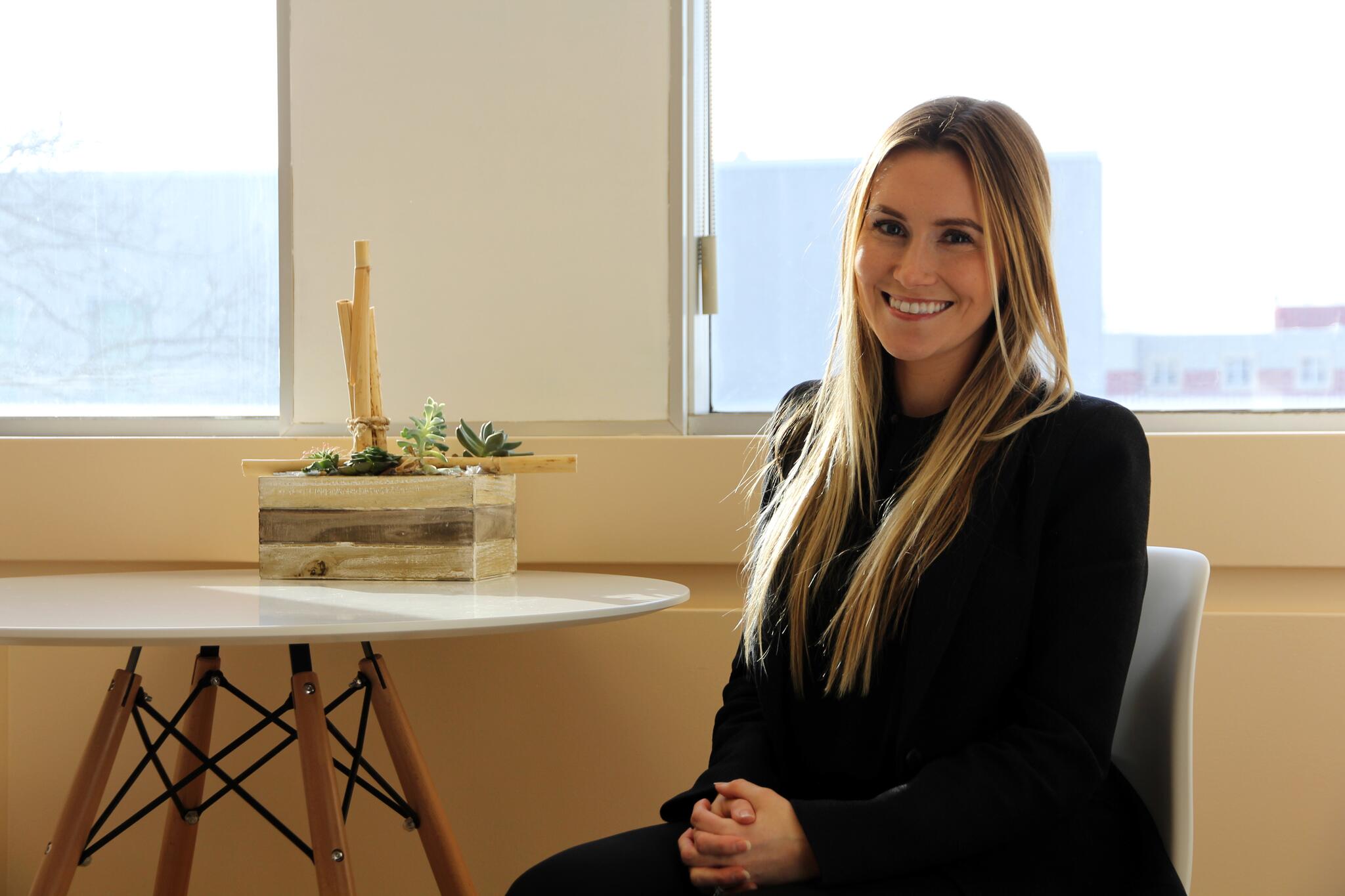
 Dr. Kristy Timmons, Associate Dean, Graduate Studies and Associate Professor of Early Childhood Education at the Faculty of Education, has received a SSHRC Insight Development Grant for her project aimed at designing and testing professional development for early childhood educators. The Sound Start Pilot Project focuses on enhancing Early Childhood Educators’ knowledge and strategies to develop children’s phonological awareness, which is an essential skill for recognizing and working with the sounds of spoken language and a key building block for early reading and spelling. Dr. Timmons explains that the project has three main objectives: “to design professional learning that fits the conditions of preschool classrooms, to pilot it across ten licensed childcare centres in Ontario using intervention and comparison groups, and to gather early evidence of its effects.” The pilot will involve approximately 30 educators and 100 children in order to establish the feasibility and merit of the program.
The Sound Start Pilot Project will be developed in collaboration with two other co-applicants: Dr. Pamela Beach and Dr. Angela Pyle. Dr. Beach, Associate Dean, Research, and Associate Professor of Language and Literacy, will co-design the program and supervise the teaching of phonological awareness by early childhood educators. Meanwhile, Dr. Pyle, Associate Professor in the Department of Applied Psychology and Human Development at OISE and Director of the Play Learning Lab, will support the use of play in the program. Scott Compeau, Director of Education and Innovation at BGC Southeast, will join the team to help recruit centres, and Dr. Timmons also hopes to recruit advisory committee members from the Association of Early Childhood Educators of Ontario and the Atkinson Centre. She also recognizes the importance of involving graduate students from Queen’s University and OISE on the team to help create materials, collect data, conduct data analyses, and write future publications.
Dr. Timmons shares that this project was inspired by two key influences: the Ontario Human Rights Commission's Right to Read report and her own research in early childhood education settings. Regarding the first one, Dr. Timmons explains that “the Right to Read inquiry found that our education system hasn't been consistent about using evidence-based approaches to teaching reading. Its recommendations are aimed at elementary school, but the skills it's talking about start developing long before that.”
Dr. Timmons also noticed that the Canada-Wide Early Learning and Child Care rollout started highlighting the importance of professional learning for the early years workforce but offered limited guidance on supporting early literacy. This situation made her reflect on her own research and experience, “I'd been studying kindergarten classrooms, looking at how educators' expectations shape what children learn, and what kept striking me was that the gaps were already there in kindergarten. Educators in childcare settings are well placed to change that, but very few have had training in this area, and there are no free programs designed for people working with three- and four-year-olds," she explains.
For this reason, and through the Sound Start Pilot Project, Dr. Timmons looks forward to going back to preschool settings, where she will be able to continue researching, observing, and learning from preschool classrooms. As an Early Childhood Educator herself, she’s excited about collaboratively designing a professional development program and testing it in these environments, where she will be able to model evidence-based teaching practices and help educators recognize the good practices they are already implementing. As Dr. Timmons explains, “many educators are already doing some of it without naming it. If we can help them notice and be more deliberate about it, it is more likely to result in sustained changes to practices, which is different than just handing someone a curriculum to deliver.”
Dr. Timmons feels excited about working with graduate students from Queen’s University and OISE, as she expects to guide them in discovering the kind of researcher they would like to become. In her words, “getting to support the mentorship of these graduate students in a project I am so passionate about is something I am really looking forward to.”